
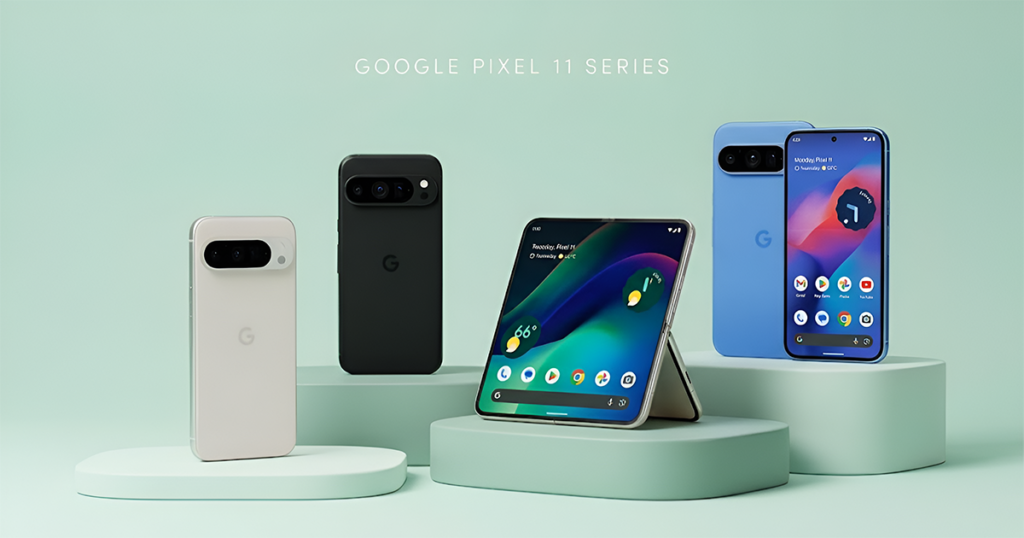
Google has officially unveiled its new Pixel 11 smartphone family, bringing a new generation of Pixel hardware with a stronger focus on artificial intelligence, photography, performance and everyday software experiences.
The lineup includes four devices: the Google Pixel 11, Pixel 11 Pro, Pixel 11 Pro XL and Pixel 11 Pro Fold. Google announced the phones on August 12, with the new generation introducing the Tensor G6 processor, upgraded camera capabilities, new AI-powered features, improved displays on the Pro models and a redesigned approach to notifications and mobile photography.
The Pixel 11 series also marks a notable change in Google’s pricing strategy. The standard Pixel 11 starts at $899, while the Pixel 11 Pro starts at $1,099 and the Pixel 11 Pro XL at $1,299. The Pixel 11 Pro Fold starts at $1,899. All four models now start with at least 256GB of storage.
Rather than simply competing on traditional smartphone specifications, Google is positioning the Pixel 11 family around AI-assisted experiences, computational photography and deeper integration between hardware and Gemini.
Google’s new lineup raises the entry price by $100 compared with the previous generation, but the company has also doubled the base storage on the standard model from 128GB to 256GB. The Pro models can be configured with up to 1TB of storage, while higher-end configurations offer up to 16GB of RAM.
Pixel 11 Series: What’s New?
The Pixel 11 generation is best understood as an evolution of Google’s existing strategy rather than a complete redesign.
The hardware has been refined, but Google’s bigger emphasis is on what the phones can do with software and AI.
The most important changes include:
- New Tensor G6 processing hardware
- Improved camera systems and computational photography
- New AI-powered camera features
- Gemini-based intelligence
- Magic Capture
- Camera Looks
- 8K Pro Stable Video on Pro models
- Creator Suite tools for video creators
- Improved speech-to-text capabilities
- Live translation features
- HiLight LED notifications on Pro models
- Brighter Pro displays
- Qi2.2 wireless charging
- Up to 30 hours of claimed battery life
Google’s strategy is clear: the Pixel 11 is designed to make AI a more integrated part of the smartphone experience instead of keeping AI confined to a standalone assistant application.
Google Pixel 11
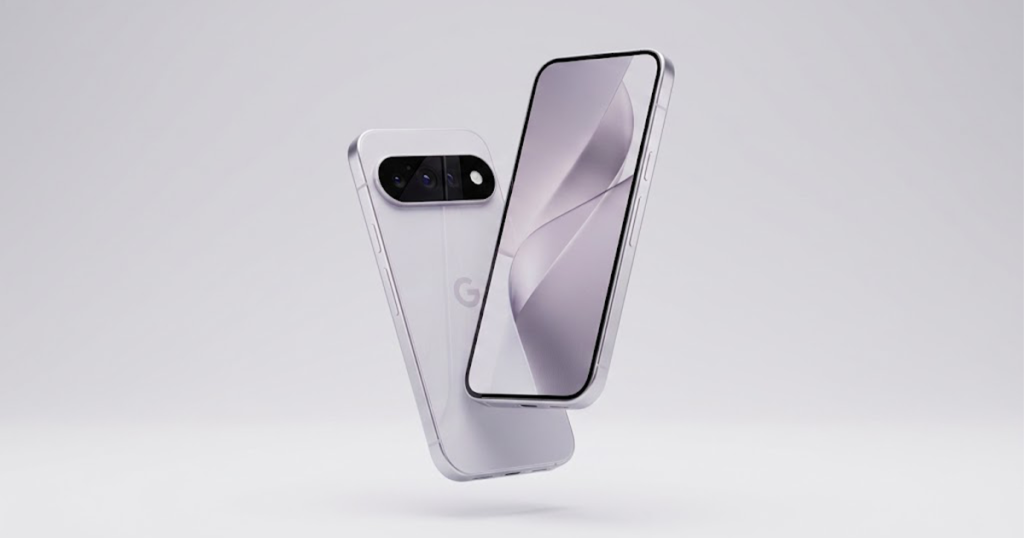
The standard Pixel 11 is designed for buyers who want Google’s latest software and camera technology without moving into the more expensive Pro range.
The phone starts at $899 with 256GB of storage, making the storage upgrade one of the more practical changes compared with the previous generation.
Google has also refined the Pixel’s familiar camera-bar design, making it slimmer while improving the camera system’s zoom capabilities. Coverage from The Verge indicates that the standard Pixel 11 can reach up to 30x zoom.
For everyday users, the Pixel 11’s biggest attraction is likely to be the combination of Google’s camera processing, Gemini-powered features and the clean Android experience.
It is also the model that makes the Pixel 11 family most accessible to mainstream buyers, although its $899 starting price puts it firmly in premium flagship territory.
Google Pixel 11 Pro
The Pixel 11 Pro is aimed at users who want Google’s most advanced traditional smartphone experience without the larger Pro XL form factor.
The Pro model brings more advanced camera hardware, brighter display technology and additional software features.
Google’s Pro camera system is particularly important because photography remains one of the strongest reasons to choose a Pixel.
The Pixel 11 Pro also benefits from features such as Magic Capture, Camera Looks and advanced video capabilities, giving users more control over how photos and videos are captured and processed.
The phone starts at $1,099.
Google Pixel 11 Pro XL
The Pixel 11 Pro XL is Google’s large-screen flagship.
It shares much of the Pro model’s camera and software technology but is designed for users who prefer a larger display and the additional space that comes with a bigger phone.
The Pro XL’s display reaches up to 3,600 nits of brightness, according to hands-on reporting from The Verge, making outdoor visibility one of the areas Google has focused on with its premium models.
The Pixel 11 Pro XL starts at $1,299.
For buyers who consume a lot of video, edit photos, play games or simply prefer large phones, the Pro XL is positioned as the highest-end conventional Pixel.
Google Pixel 11 Pro Fold
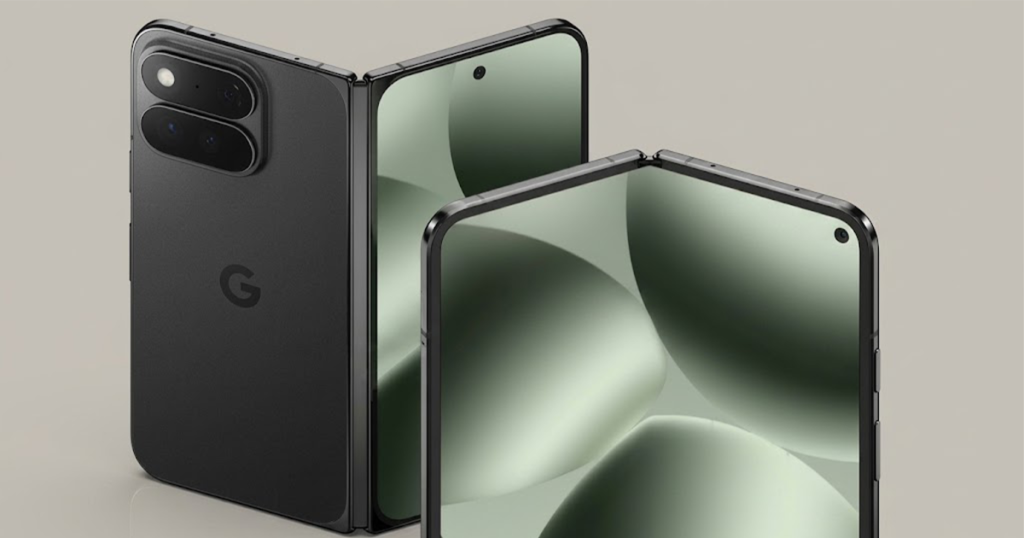
The Pixel 11 Pro Fold takes Google’s Pixel strategy into the foldable-phone category.
Starting at $1,899, it is substantially more expensive than the standard Pixel 11 models, but it offers a fundamentally different form factor.
Google has focused on durability, thinner bezels and brighter displays with this generation. The Pro Fold also receives the Tensor G6 platform and Google’s latest AI software capabilities.
The foldable model is therefore less about being a simple “better Pixel 11” and more about offering a Pixel experience for people who want a larger multitasking workspace that can still fit into a phone-sized device when folded.
Design and Display
Google has not abandoned the distinctive Pixel design language for the Pixel 11 generation.
Instead, the company has refined it.
One of the most visible changes is the slimmer camera bar. The overall design remains recognizably Pixel, but the new camera treatment makes the phones look somewhat less bulky from the rear.
The Pro models receive some of the more substantial display improvements, including higher brightness.
According to The Verge’s hands-on coverage, the Pixel 11 Pro and Pro XL can reach up to 3,600 nits of brightness.
That matters particularly for outdoor use. A brighter display does not automatically make a phone better in every situation, but it can make maps, photos, messages and video easier to see under strong sunlight.
The Pro Fold takes the display concept further by combining an external screen with a larger internal foldable display.
Tensor G6: Google’s New Pixel Processor
One of the biggest changes inside the Pixel 11 family is the move to Google’s Tensor G6 processor.
Tensor has always been less about chasing benchmark records and more about enabling Google’s machine-learning features directly on the phone.
That philosophy continues with the Pixel 11.
The new processor is intended to provide the computing foundation for Google’s latest camera processing, speech recognition, AI functions and other Pixel-specific experiences.
Independent reporting indicates that Tensor G6 delivers meaningful performance improvements compared with Tensor G5, with The Verge reporting improvements of up to 25% in certain performance areas.
However, buyers should not interpret that as meaning Tensor G6 automatically beats every competing flagship processor in every benchmark.
Google’s advantage remains the integration between its silicon, Android, Gemini and Pixel-specific software.
For Pixel users, that integration can matter more than raw benchmark scores.
Pixel 11 Camera Upgrades
Photography remains at the heart of the Pixel 11 experience.
Google’s Pixel phones have traditionally relied heavily on computational photography, using software and machine learning to improve images beyond what the camera hardware alone can achieve.
The Pixel 11 generation pushes that philosophy further.
The Pro models receive an upgraded 50MP main camera and improved low-light capabilities, while the Pro camera system can reach up to 120x zoom. The standard Pixel 11 also receives improved zoom capabilities, reaching up to 30x.
The bigger story, however, is not simply the megapixel count.
Google has introduced several new camera tools designed to change how people capture and edit content.
Magic Capture
Magic Capture is designed to capture a rapid combination of images and video, giving users more flexibility when a moment happens too quickly for a traditional single photograph.
The idea is particularly useful for children, pets, sports and other situations where subjects move unpredictably.
Camera Looks
Camera Looks is one of the more interesting additions to the Pixel 11 camera system.
Rather than relying entirely on post-processing after a photograph has been captured, Google is introducing looks that influence image processing at the sensor level.
The feature is exclusive to the Pixel 11 series at launch. One of the available styles, known as “Digi,” is designed to evoke the appearance of early digital cameras.
This is an interesting direction because smartphone photography has increasingly converged around highly processed HDR images.
Camera Looks gives users more control over the character of their photographs rather than simply trying to make every image as sharp and bright as possible.
8K Pro Stable Video
The Pro models also gain 8K Pro Stable Video, giving creators a higher-resolution recording option with an emphasis on stabilization.
Google is clearly trying to make the Pixel more attractive to people who create content directly from their phones.
Creator Suite
The Creator Suite brings additional tools for shooting and editing video into the Pixel experience.
This is another indication that Google sees the smartphone not merely as a camera but as a compact content-creation device. You can also use HONOR’s Robot Phone. HONOR’s Robot Phone goes a step beyond software tools like Creator Suite, adding a physical robotic gimbal that lets the phone actively move to frame and stabilize footage — turning hardware itself into part of the creative toolkit.
Gemini AI and the Pixel 11
AI is arguably the biggest theme of the Pixel 11 generation.
Google has increasingly positioned Pixel as the place where its Gemini ecosystem can be experienced directly through the phone.
The Pixel 11 continues that approach with deeper Gemini-powered capabilities and new AI features designed around photography, translation, speech and contextual assistance.
Gemini Intelligence
Gemini is becoming more deeply integrated into Google’s mobile ecosystem.
Instead of simply asking an AI chatbot questions, Pixel users can interact with AI through features that are connected to the phone’s camera, communication tools and other experiences.
That makes the Pixel 11’s AI strategy more interesting than simply including another chatbot.
Live Translation
The new phones can use AI for real-time translation experiences, including translation of video and spoken content.
This could be especially useful for travelers and multilingual users because the translation capability is integrated into the phone rather than requiring a separate application and workflow.
Improved Speech-to-Text
Google has also improved speech recognition and transcription capabilities.
This is an area where Google’s machine-learning expertise can have a noticeable practical impact because better transcription can make voice messages, notes and dictation considerably more useful.
Circle to Search and Visual AI
Google continues to build visual search into the Pixel experience.
The broader strategy is to let users use the camera and screen as interfaces for AI rather than treating the phone as a conventional collection of apps.
HiLight: A Different Approach to Notifications
One of the most unusual Pixel 11 features is HiLight, introduced on the Pro models.
HiLight uses an RGB LED system to provide visual notification cues.
The idea is simple: instead of relying exclusively on sounds, vibrations or the traditional always-on display, the phone can provide visual signals associated with notifications and contacts.
The Verge and TechRadar both identified HiLight as one of the more distinctive additions to the new Pixel generation.
Whether it becomes an essential feature will depend largely on how well users incorporate it into their daily routines, but it gives the Pixel 11 a hardware feature that is genuinely different from the standard flagship formula.
Battery Life and Charging
Battery life remains an important consideration for any flagship phone, especially as manufacturers add increasingly demanding AI functions.
Google says the new Pixel phones can deliver up to 30 hours of battery life.
The company has also introduced faster wireless charging support based on the Qi2.2 standard across the new lineup.
Google is also introducing an Extreme Charging Mode, giving users another option when they need to prioritize charging speed.
However, claimed battery figures should always be treated as manufacturer estimates rather than guarantees of real-world endurance.
Actual battery life will vary according to display brightness, mobile connectivity, camera use, gaming, AI workloads and other factors.
Android 17 and Pixel Software
The Pixel 11 arrives during the Android 17 generation, giving Google’s phones a direct connection to the latest Android platform.
Software remains one of the Pixel family’s biggest advantages.
Pixel devices receive Android updates directly from Google and benefit from regular Pixel Drops that introduce additional features over time.
Google’s Pixel ecosystem has also increasingly become a showcase for Gemini and other Google AI services.
This means the software experience is arguably just as important as the hardware when evaluating a Pixel 11.
For buyers who want a phone that receives Google’s Android features first, Pixel remains one of the most straightforward choices.
Pixel 11 Price and Availability
The Pixel 11 lineup represents a significant price increase compared with the previous generation.


Add your first comment to this post