
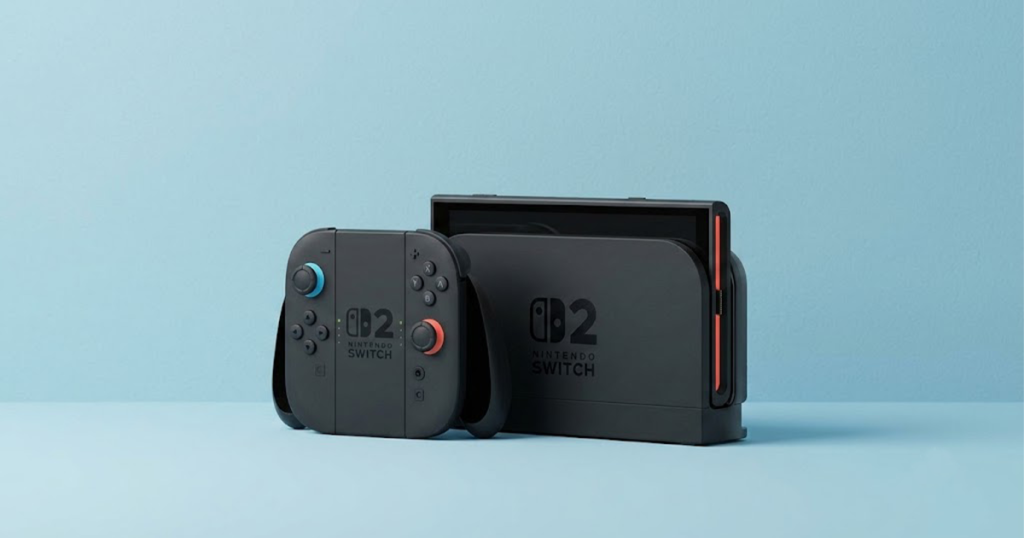
Nintendo Switch 2 Review: Is It Worth Buying in 2026?
The Nintendo Switch changed the gaming industry when it launched in 2017 by combining handheld and home console gaming into a single device. Nearly a decade later, Nintendo has introduced its long-awaited successor, the Nintendo Switch 2, bringing more powerful hardware, a larger display, improved graphics, and new social features while keeping the hybrid design that made the original console so popular.
The Switch 2 arrives at a time when handheld gaming has become more competitive than ever. Devices like the Steam Deck, ASUS ROG Ally, and Lenovo Legion Go offer PC gaming on the go, while Sony and Microsoft continue to dominate the traditional console market. Nintendo has taken a different approach by focusing on exclusive games, portability, and family-friendly experiences rather than competing purely on raw processing power.
This Nintendo Switch 2 Review is designed for everyone—from longtime Nintendo fans and first-time buyers to parents looking for a family console, students seeking portable entertainment, and casual gamers wondering whether the upgrade is worth the investment.( want to buy )
In this review, we’ll examine the console’s design, display, performance, gaming experience, battery life, and overall value using officially announced specifications alongside practical observations. We’ll also compare it with the Nintendo Switch OLED and discuss whether it deserves a place among the best gaming devices of 2026.
Verdict (Short Version): The Nintendo Switch 2 delivers meaningful hardware improvements without changing Nintendo’s winning formula. Whether it’s worth buying depends largely on the games you play and whether you already own a Switch OLED.
Nintendo Switch 2 Specifications
| Specification | Details |
|---|---|
| Release Date | June 5, 2025 |
| Starting Price | $449.99 (US) |
| Display | 7.9-inch LCD |
| Resolution | 1920 × 1080 |
| Refresh Rate | Up to 120Hz |
| HDR | Supported |
| Processor | Custom NVIDIA processor |
| Graphics | NVIDIA GPU with DLSS support |
| RAM | 12GB LPDDR5X |
| Storage | 256GB UFS |
| Expandable Storage | microSD Express |
| Battery | 5,220mAh |
| Weight | Approx. 534g with Joy-Con 2 |
| TV Output | Up to 4K (supported games) |
| Wireless | Wi-Fi 6, Bluetooth |
| Ports | Dual USB-C |
| Operating System | Nintendo Switch OS |
What’s New Compared to the Original Switch?
Nintendo didn’t completely reinvent its hybrid console. Instead, it refined nearly every aspect of the original design.
The biggest upgrade is the new custom NVIDIA chipset, which supports DLSS (Deep Learning Super Sampling) and hardware-accelerated ray tracing. These technologies allow supported games to deliver sharper visuals, improved lighting, and smoother performance.
The Switch 2 features a larger 7.9-inch 1080p LCD display with up to a 120Hz refresh rate and HDR support, offering a noticeably better handheld gaming experience than the original Switch.
Storage has increased to 256GB of fast UFS storage, reducing loading times and providing more room for digital games before expansion is needed via microSD Express cards. Want to buy in amazon
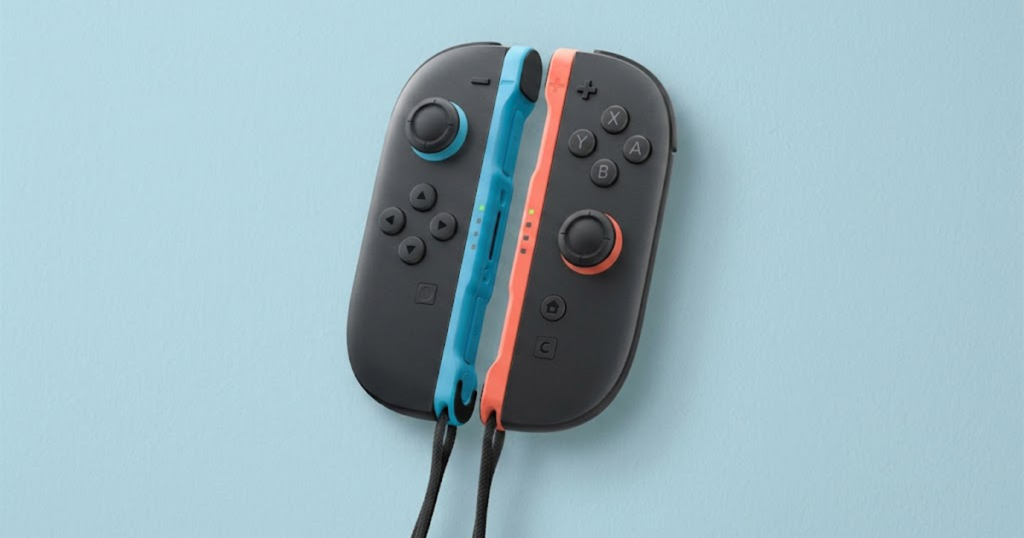
Nintendo has also redesigned the Joy-Con controllers with a more secure magnetic attachment system, improved ergonomics, and refined analog sticks.
The upgraded dock supports up to 4K output on compatible TVs, while GameChat adds easier online communication. Backward compatibility with most original Switch games ensures existing game libraries remain usable.
Overall, the Switch 2 modernizes the platform with meaningful improvements while preserving the versatility that made the original Switch successful.
Design and Build Quality
At first glance, the Nintendo Switch 2 looks similar to its predecessor, but several refinements improve comfort and usability.
The larger display increases the device size, yet the console remains comfortable for extended gaming sessions. Rounded edges provide a better grip, while the improved build quality and redesigned kickstand offer a more premium and stable experience.
The new magnetic Joy-Con attachment system is faster, smoother, and more secure than the previous sliding rail design. Nintendo has also added a second USB-C port for greater connectivity and convenience.
Improved cooling helps maintain comfortable temperatures and quieter performance during demanding games. While durability appears better, long-term reliability will become clearer with extended use.
Display Review
The display is one of the Switch 2’s biggest upgrades. Nintendo has introduced a 7.9-inch Full HD LCD panel with HDR support and refresh rates up to 120Hz in compatible games. Compared to the original Switch’s 720p screen, the improvement is clear, with sharper text, more detailed visuals, and better overall clarity in handheld mode.
The LCD panel delivers vibrant colors and improved brightness, although it cannot match the deep blacks and contrast of the Switch OLED. HDR support improves highlights and dynamic range in supported games, while 120Hz makes menus feel smoother and gameplay more responsive.
The main drawback is that Nintendo still uses LCD instead of OLED, which some fans expected at this price. However, it remains one of the best LCD displays Nintendo has used in a handheld console.
Performance Review
The Nintendo Switch 2 is powered by a custom NVIDIA processor designed to balance performance, battery efficiency, and portability rather than simply maximizing power.
Compared to the original Switch, games load faster, menus feel more responsive, and multitasking is smoother thanks to improved storage and memory. The biggest upgrade is NVIDIA DLSS, which enhances image quality by upscaling lower-resolution visuals while maintaining performance.
Hardware-accelerated ray tracing also improves lighting and reflections in supported games, although its impact depends on developer implementation. First-party titles run smoothly with faster loading and more stable performance, while third-party games benefit from the extra power.
Although it does not compete with high-end gaming PCs or consoles like the PS5, the Switch 2 delivers a major performance improvement over the original model, with better thermal management and a smoother overall experience.
Gaming Experience
The Nintendo Switch 2 builds on Nintendo’s biggest strength: delivering enjoyable games that are easy to pick up but difficult to put down. While the hardware is considerably more powerful than the original Switch, it’s Nintendo’s exclusive game library and improved performance that truly define the experience.
Mario Kart World
One of the console’s biggest launch titles is Mario Kart World, which expands the series with larger interconnected environments, more racers, and dynamic weather effects. On the Switch 2, the game runs smoothly and benefits from the console’s improved graphics capabilities, making races feel more immersive whether you’re playing alone or with friends.
Local multiplayer remains one of Nintendo’s strongest advantages. Split-screen gameplay is smoother than on the original Switch, with fewer noticeable frame drops during busy races.
The Legend of Zelda
Both The Legend of Zelda: Breath of the Wild and Tears of the Kingdom receive noticeable improvements on the new hardware. Loading times are shorter, frame rates are more stable, and the higher-resolution display makes Hyrule look sharper in handheld mode.
Although these games were originally designed for the first-generation Switch, the newer hardware allows them to perform more consistently, particularly in larger open-world areas.
Pokémon Games
Recent Pokémon titles also benefit from the upgraded hardware. Larger environments feel smoother, and performance is more consistent during exploration and battles. While visual quality still depends on individual game optimization, the Switch 2 provides a stronger foundation for future Pokémon releases.
Third-Party AAA Games
The biggest improvement may be third-party support.
Developers now have significantly more hardware resources to work with, making it easier to bring modern AAA games to Nintendo’s platform. Features like DLSS help maintain image quality while improving frame rates in demanding titles.
Players who previously avoided buying third-party games on Switch because of performance limitations may find the Switch 2 a much more attractive option.
Indie Games
Nintendo continues to be one of the best platforms for indie developers.
Games such as roguelikes, puzzle games, platformers, and narrative adventures benefit from faster loading times and smoother performance. The handheld format also makes indie games particularly enjoyable during travel or short gaming sessions.
Online Gaming
Nintendo has improved the online experience with GameChat, making it easier to communicate with friends while playing supported games. Online multiplayer remains simple to access, although the overall online ecosystem is still less feature-rich than Xbox Live or PlayStation Network.
Local Multiplayer
The hybrid design remains one of Nintendo’s greatest strengths. Removing the Joy-Con controllers and instantly starting local multiplayer still feels unique, and the stronger hardware allows many games to maintain smoother performance during split-screen sessions.
Overall, gameplay feels more polished across nearly every genre compared to the original Switch.
Battery Life
Battery life varies depending on the type of game being played, display brightness, wireless features, and system settings.
During lighter games, strategy titles, puzzle games, or indie releases, the Switch 2 can comfortably last several hours before needing a recharge.
Graphically intensive games naturally consume more power. Demanding first-party titles and modern AAA releases reduce battery life, especially when running at higher frame rates or HDR settings.
Using maximum brightness also has a noticeable impact on endurance, particularly when gaming outdoors.
Online multiplayer sessions require additional wireless connectivity, which slightly increases power consumption compared to offline play.
Fortunately, sleep mode remains extremely efficient. Leaving the console in standby overnight results in minimal battery drain, allowing players to resume games almost instantly.
Charging through USB-C is convenient, and the console can be topped up while continuing to play in handheld mode.
Rather than focusing only on manufacturer estimates, real-world battery life is best described as good but workload dependent. Players who primarily enjoy casual or indie games will see considerably longer sessions than those playing graphically demanding titles.
Joy-Con 2 Review
Nintendo has redesigned its controllers while keeping the familiar Joy-Con concept.
The most obvious improvement is the magnetic attachment system, which replaces the sliding rails used on previous Switch models. Attaching controllers now feels quicker and more secure.
Comfort has also improved thanks to slightly larger grips and refined ergonomics. Long gaming sessions feel less fatiguing, particularly for adult players.
Button feedback remains responsive, while the analog sticks feel smoother and more precise.
Motion controls continue to perform well in supported games, and HD Rumble returns with improved tactile feedback that adds subtle immersion during gameplay.
Some games also introduce mouse-like functionality, allowing the Joy-Con 2 to support new control methods in compatible titles.
One long-term question concerns stick drift. Nintendo has implemented design improvements, but only extended real-world use will determine whether drift has been fully resolved.
Overall, the Joy-Con 2 represents a meaningful refinement rather than a complete redesign.
Software Experience
Nintendo has kept the software interface familiar while introducing several quality-of-life improvements.
The home screen remains simple and easy to navigate. Menus load faster than before, and switching between games feels noticeably more responsive.
The Nintendo eShop benefits from improved performance, making browsing, searching, and downloading games significantly smoother than on previous Switch hardware.
Cloud save support continues to protect player progress for compatible games, while digital purchases remain tied to Nintendo accounts.
GameChat introduces easier communication between friends, helping modernize Nintendo’s online ecosystem without making the interface overly complicated.
Accessibility features continue to expand through system updates, including display adjustments and controller customization options.
Parental controls remain among the best in the gaming industry, allowing parents to monitor play time, restrict purchases, and manage content access through Nintendo’s companion app.
Regular software updates also demonstrate Nintendo’s ongoing commitment to improving stability and adding new features over time.
Nintendo Switch 2 Games
A gaming console ultimately succeeds because of its software library, and this remains Nintendo’s greatest advantage.
The launch lineup includes major first-party releases led by Mario Kart World, alongside updated versions of existing Nintendo favorites.
The system also supports the vast majority of original Nintendo Switch games through backward compatibility, allowing existing owners to bring their libraries forward.
Looking ahead, Nintendo’s development studios continue to produce some of the industry’s most recognizable franchises, including Mario, Zelda, Pokémon, Animal Crossing, Metroid, Kirby, Splatoon, and Super Smash Bros.
Third-party publishers also appear increasingly interested in supporting the new hardware thanks to its stronger performance capabilities.
Players can choose between physical game cards and digital downloads depending on their preferences, although larger game sizes may encourage expanded storage for digital collectors.
Camera, Audio, and Connectivity
The Switch 2’s stereo speakers deliver clearer sound than previous models, with improved separation and fuller audio during handheld gaming.
Headphone output remains excellent, while Bluetooth audio support allows users to connect compatible wireless headphones without additional accessories.
Wireless connectivity now includes Wi-Fi 6, improving download speeds and online stability on supported networks.
The upgraded dock continues to include Ethernet support for players seeking the most reliable online connection.
Dual USB-C ports provide greater flexibility for charging and accessories, while TV mode supports up to 4K output in compatible games.
Nintendo’s accessory ecosystem also continues to expand with controllers, carrying cases, docks, cameras, and other officially supported peripherals.
Nintendo Switch 2 vs Switch OLED
| Feature | Nintendo Switch 2 | Switch OLED |
|---|---|---|
| Display | 7.9″ 1080p LCD, 120Hz | 7″ OLED |
| Performance | Much faster | Original hardware |
| Graphics | DLSS, Ray Tracing | Standard graphics |
| Storage | 256GB | 64GB |
| TV Output | Up to 4K | Up to 1080p |
| Battery | Similar, workload dependent | Slightly longer in lighter games |
| Joy-Con | Magnetic Joy-Con 2 | Original Joy-Con |
| Price | Higher | Lower |
The Switch OLED still offers a beautiful OLED display and remains an excellent option for budget-conscious buyers. However, the Switch 2 delivers substantial improvements in performance, storage, graphics, and future game support.
Nintendo Switch 2 vs Steam Deck
| Feature | Nintendo Switch 2 | Steam Deck |
|---|---|---|
| Game Library | Nintendo exclusives | Steam PC library |
| Performance | Optimized console experience | More raw PC flexibility |
| Portability | Lighter | Heavier |
| Ease of Use | Very simple | More technical |
| Battery | Comparable | Depends heavily on game |
| Price | Lower starting price | Higher for larger storage models |
Choose the Nintendo Switch 2 if you want Nintendo exclusives, family gaming, and a simple console experience.
Choose the Steam Deck if you already own a large Steam library and prefer PC gaming flexibility.
Pros
- Significant performance improvement over the original Switch
- Larger, sharper 1080p display with 120Hz support
- DLSS and ray tracing support
- Faster loading times
- Improved Joy-Con 2 controllers
- Backward compatibility with most Switch games
- Strong exclusive game library
- Better dock with 4K output support
- Larger internal storage
- Improved online features through GameChat
Cons
- LCD display instead of OLED
- Premium launch price
- Battery life varies significantly with demanding games
- Some launch features depend on developer support
- Limited number of launch exclusives compared with long-term expectations
Who Should Buy It?
The Nintendo Switch 2 is an excellent choice for:
- First-time Nintendo buyers
- Families
- Students
- Travelers
- Casual gamers
- Players upgrading from the original 2017 Switch
- Fans of Nintendo’s exclusive franchises
Who Should Skip It?
You may want to consider another option if:
- You recently purchased a Switch OLED and are satisfied with its performance.
- You primarily play high-end PC games.
- You prefer maximum graphical performance from a PlayStation 5, Xbox Series X, or gaming PC.
- You already own a Steam Deck and mainly play PC titles.
Is the Nintendo Switch 2 Worth Buying in 2026?
After spending time with Nintendo’s latest hybrid console, it’s clear that this is far more than a minor hardware refresh. The upgraded processor, larger display, faster storage, redesigned Joy-Con 2 controllers, and improved graphics capabilities make everyday gaming noticeably better than on previous Switch models.
While the decision to use an LCD instead of an OLED panel may disappoint some buyers, the display still offers impressive image quality, smoother motion, and HDR support. Combined with backward compatibility and Nintendo’s unmatched library of exclusive games, the Switch 2 is well positioned for years of software support.
For owners of the original Switch, the upgrade is easy to recommend. Those who recently purchased a Switch OLED may find less urgency unless they want the improved performance and upcoming exclusive titles.
Final Rating: 9/10
The Nintendo Switch 2 Review ultimately shows that Nintendo has successfully modernized its hybrid console without losing the accessibility and fun that made the original such a success. If you’re looking for a versatile gaming system with excellent first-party games, improved hardware, and strong long-term value, the Nintendo Switch 2 is one of the best gaming consoles to buy in 2026.

Add your first comment to this post