
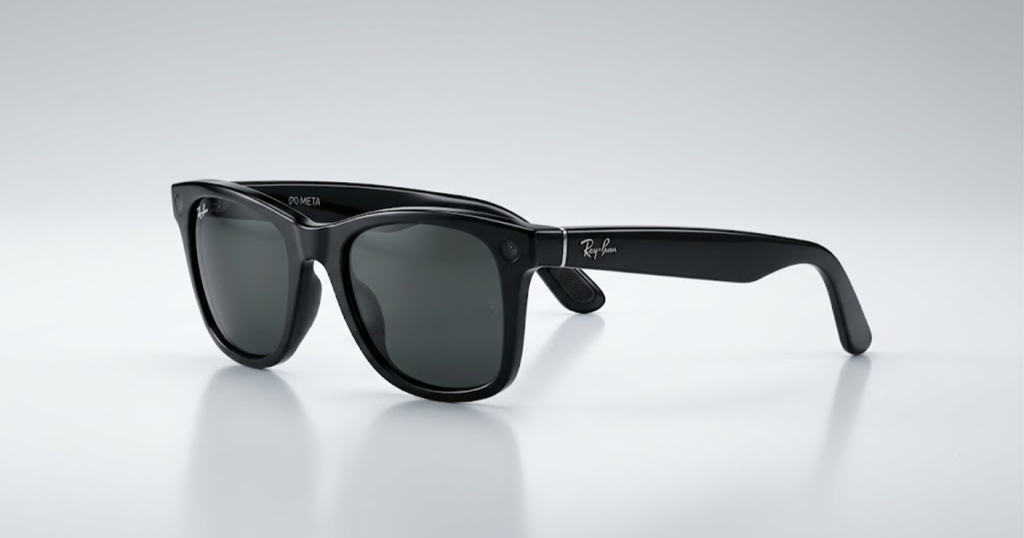
What Are AI-Powered Smart Glasses?
AI-powered smart glasses are eyewear that combine a camera, microphones, speakers, and an onboard or cloud-connected AI assistant inside a normal-looking frame. Unlike older “smart glasses” that mostly recorded video, today’s versions are built around conversational AI, letting the wearer ask questions about what they see or hear and get spoken or visual answers.
Some models, like the standard Ray-Ban Meta glasses, are audio-first and have no screen. Others, like Meta Ray-Ban Display, add a small display embedded in one lens so the wearer can see messages, directions, and camera previews.
Target audience: everyday consumers, commuters, travelers, content creators, and increasingly professionals who want hands-free access to information.
Supported platforms: Meta’s glasses pair with iOS and Android phones through the Meta AI app; Google and Samsung’s upcoming glasses run on the Android XR platform paired with Android devices.
Primary use cases: hands-free photo and video capture, voice-controlled AI assistance, live translation, turn-by-turn navigation, music and calls, and message previews on models with a display.
What’s New in AI Smart Glasses (2026)
The smart glasses category has expanded significantly through 2026. Meta, which pioneered the modern wave of AI glasses with Ray-Ban Stories in 2021, now sells a multi-tier lineup. In June 2026, Meta and EssilorLuxottica introduced a new, lower-cost line called Meta Glasses, starting at $299, sold without Ray-Ban or Oakley branding and running the same Meta AI system as the rest of the range.
At the higher end, Meta Ray-Ban Display — first announced at Meta Connect 2025 and now widely available in the US — added the company’s first built-in lens display alongside the Meta Neural Band, a wristband that reads hand gestures through muscle signals rather than a touchpad.
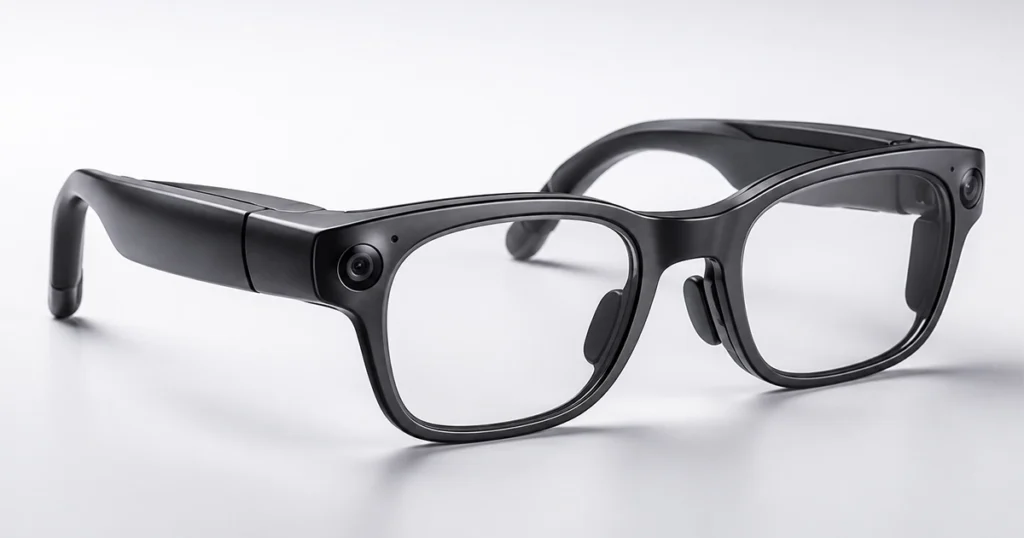
Google entered the race officially at I/O 2026, unveiling Android XR smart glasses built with Samsung, Qualcomm, and eyewear partners Warby Parker and Gentle Monster. Samsung confirmed the partnership at its Galaxy Unpacked event in London on July 22, 2026, introducing its own Intelligent Eyewear in Audio Glasses and Display Glasses variants, both powered by Google’s Gemini AI. Pricing and exact release dates for the Google/Samsung glasses have not yet been officially confirmed.
Key Features of AI-Powered Smart Glasses
AI Assistant Integration
The core feature of this category is a built-in AI assistant. On Meta’s glasses, Meta AI answers questions, identifies objects and landmarks, translates languages in real time, and helps with hands-free tasks like setting reminders. Google and Samsung’s upcoming glasses use Gemini for similar tasks, including scanning whiteboards into notes, summarizing messages, and giving location-based navigation.
Camera and Video Capture
Meta Ray-Ban Display includes a 12-megapixel ultra-wide camera with 3x digital zoom, capable of recording 3K-resolution video. A viewfinder shown directly on the in-lens display helps users frame shots before capturing them — a feature not available on screenless models.
In-Lens Display
Meta Ray-Ban Display features a 600 x 600 pixel full-color display built into the right lens, with a 90Hz refresh rate for interactive content and a 30Hz refresh for static images, reaching brightness levels up to 5,000 nits. The display can show text messages, video calls on WhatsApp and Messenger, turn-by-turn walking directions, live captions, real-time translations, and Meta AI responses.
Gesture Control via Neural Band
Rather than relying only on voice commands or a temple touchpad, Meta Ray-Ban Display ships with the Meta Neural Band, a wrist-worn accessory that uses surface electromyography (sEMG) to detect subtle finger and hand movements. This lets users scroll, click, and eventually type using barely visible gestures.
Audio and Calling
The glasses include a six-microphone array and open-ear speakers, enabling hands-free calling, music playback, and two-way video calls where the wearer sees the caller on the display while the caller sees through the glasses’ camera.
User Interface & Experience
Meta’s AI glasses are designed to look like ordinary eyewear rather than bulky tech gadgets, which is a deliberate design choice to encourage everyday wear. Controls are split between voice commands (“Hey Meta”), a touch-sensitive temple, and — on Display models — the Neural Band’s gesture controls.
The companion Meta AI app is where users manage settings, import photos and videos, adjust privacy and accessibility options, and browse a “Discover” feed showing how other people use their glasses. Prescription lenses are supported, with Meta Ray-Ban Display offering a prescription range between -4.00 and +4.00 total power.
Because in-person demos are required before purchase for the Display model, Meta has prioritized guided onboarding through authorized retailers such as Best Buy, LensCrafters, Sunglass Hut, and dedicated Ray-Ban stores.
Performance
Meta Ray-Ban Display is built around a 248 mAh battery in the frame, rated for up to six hours of mixed use, extendable to roughly 24 hours with the included foldable charging case. The Meta Neural Band uses a separate 134 mAh battery, rated for up to 18 hours per charge and carrying an IPX7 water-resistance rating.
The glasses run on 2GB of LPDDR4x RAM with 32GB of internal flash storage, enough to hold roughly a thousand photos or more than a hundred 30-second videos before syncing to a phone. Connectivity is handled through Wi-Fi 6 and Bluetooth 5.3, which keeps pairing and data transfer to the Meta AI app relatively fast.
Samsung has stated that its upcoming Intelligent Eyewear, built on the Snapdragon AR1 Gen1 platform, targets up to nine hours of battery life per charge, with the charging case providing up to seven additional full charges — figures that have not yet been independently verified since the product has not shipped.
Compatibility
Meta Ray-Ban Display requires iOS 15.2 or later, or Android 10 or later, paired through the Meta AI app. The glasses themselves weigh 69 grams and carry an IPX4 splash-resistance rating (lower than the Neural Band’s IPX7 rating, since the frame houses more sensitive electronics).
Google and Samsung’s Android XR glasses are built specifically for the Android ecosystem and run on Qualcomm’s Snapdragon AR1 Gen1 chipset. Apple has not officially announced its own AI glasses product as of this writing, so compatibility details for an Apple device are not available.
AI Features
AI is the defining layer of this entire product category, not an add-on. Meta AI, built into Ray-Ban Meta and Meta Ray-Ban Display, handles voice questions, visual identification of objects and landmarks, live translation, and contextual help based on what the camera sees. On the Display model, Meta AI’s answers also appear as text or images on the in-lens screen instead of audio only.
Google’s Gemini, which will power both Android XR audio glasses and display glasses, is designed to hold context across tasks — for example, remembering an earlier question so the wearer doesn’t need to repeat themselves — and can interact directly with apps on a paired Android phone.
It is worth noting that Meta has also been reported to be testing an experimental “super sensing” mode that would allow the glasses to continuously observe and listen to surroundings so the AI could answer questions about earlier moments in the day. According to Financial Times reporting cited by multiple outlets, this feature had not been officially released as of publication and remained in internal testing, with unresolved questions about whether the recording indicator light would stay active during that mode.
Security & Privacy
Every Meta AI glasses model includes a capture LED, a white light on the front of the frame that blinks briefly for a photo and continuously for video, intended to notify people nearby that recording is happening. Meta has stated this light has no off switch, and on second-generation models, covering the LED disables the camera until it is uncovered.
In July 2026, Meta announced an update so that glasses automatically disable the camera if the system detects the LED has been physically tampered with or destroyed, and the company said it actively removes marketplace listings offering LED-bypass modifications.
Photos and videos captured on Meta’s glasses are stored locally on the device until the wearer chooses to import them to their phone through the Meta AI app; Meta states that content is not accessible to others unless the wearer actively shares it. However, Meta’s separate privacy policy notes that any image shared with Meta AI may be used to help train its AI systems, which is a distinction users should be aware of. Meta also offers opt-in verified sessions, which prompt identity confirmation via a paired phone for added security during hands-free use.
Because these safeguards vary by feature and are subject to change, readers should review Meta’s official privacy documentation for the most current details before purchasing.
Pricing & Plans
Meta’s AI glasses lineup spans several official price tiers as of mid-2026:
- Ray-Ban Meta Gen 2: starting around $379 — 12MP camera, five-microphone array, open-ear speakers, Meta AI, no display.
- Meta Glasses (non-Ray-Ban branded line): starting at $299 — camera, Meta AI, no display.
- Oakley Meta HSTN / Vanguard: starting around $399 — sport-focused frames with the same core Gen 2 hardware.
- Blayzer Optics / Scriber Optics (prescription-forward Gen 2 frames): starting at $499.
- Meta Ray-Ban Display with Meta Neural Band: $799, the flagship model with an in-lens display and gesture control.
There is no officially confirmed subscription fee required to use core Meta AI glasses features, though some AI capabilities may depend on a connected Meta AI account. Pricing for Google and Samsung’s Android XR glasses has not been officially announced.
Pros
- Genuinely hands-free AI assistance for questions, translation, and navigation
- Discreet, fashion-forward designs from established eyewear brands
- In-lens display (on Display models) adds real utility like camera framing and live captions
- Multiple price tiers, from $299 audio-only glasses to the $799 Display flagship
- Built-in capture LED and anti-tampering safeguards for bystander privacy
- Long combined battery life when paired with the charging case
Cons
- Display and Neural Band price point ($799) is high for many buyers
- Ray-Ban Display requires an in-person demo before purchase, limiting accessibility
- Battery life on the frame alone is modest (around six hours) during active use
- Functionality is largely tied to Meta’s own app ecosystem
- Ongoing privacy questions around features like the reported “super sensing” prototype and AI training use of shared images
- Competing Android XR glasses from Google and Samsung are not yet widely available, so buyers currently have limited platform choice outside Meta
Comparison: Meta vs. Google/Samsung AI Glasses
| Feature | Meta Ray-Ban Display | Meta Ray-Ban Gen 2 | Google/Samsung Android XR Glasses |
|---|---|---|---|
| AI Assistant | Meta AI | Meta AI | Gemini |
| Display | 600x600px in-lens screen | None | Audio-first model has none; separate Display model planned |
| Price | $799 | From ~$379 | Not officially announced |
| Gesture Control | Meta Neural Band (EMG) | Touch temple only | Touch and voice (details pending) |
| Availability | Shipping now (US, expanding in 2026) | Shipping now | Audio glasses expected fall 2026 |
| Chipset | Not officially detailed by Meta | Not officially detailed by Meta | Qualcomm Snapdragon AR1 Gen1 |
Meta currently has the advantage of being first to market with a mature, multi-tier product line and millions of units sold since 2021. Google and Samsung are entering with the backing of the Gemini AI ecosystem and Android XR, but as of this writing, their glasses remain in the pre-launch or early-launch stage, so real-world performance and pricing comparisons are not yet possible.
Best For
AI-powered smart glasses are best suited for people who want quick, hands-free access to an AI assistant, translation, and photo capture without carrying extra devices. Commuters, travelers, and content creators who value discretion over immersive AR visuals will likely get the most consistent value from screenless models like Ray-Ban Meta Gen 2. (by now)
Buyers who want an in-lens display for navigation, live captions, and camera framing — and who don’t mind the higher price and gesture-learning curve — are better matched to Meta Ray-Ban Display. Those wanting a fully immersive AR headset experience should look elsewhere, since current AI glasses prioritize lightweight, everyday wearability over large-scale AR overlays.
System Requirements
- Phone OS: iOS 15.2 or later, or Android 10 or later (Meta Ray-Ban Display)
- App: Meta AI app required for setup, syncing, and settings
- Connectivity: Wi-Fi 6 and Bluetooth 5.3 supported on Ray-Ban Display
- Storage: 32GB onboard (Ray-Ban Display); capacity varies by model
- Official system requirements for Google/Samsung Android XR glasses have not yet been published.
Availability
Meta Ray-Ban Display launched in the US on September 30, 2025, through select Best Buy, LensCrafters, Sunglass Hut, Ray-Ban stores, and Meta Lab locations, with Verizon retail availability following shortly after. Meta has stated plans to expand availability to Canada, France, Italy, and the UK in early 2026, though exact dates for each country have not been confirmed.
The lower-cost Meta Glasses line launched in the US on June 23, 2026. Google’s Android XR audio glasses are expected to launch in fall 2026, according to Google’s official I/O 2026 announcement, while Samsung’s Intelligent Eyewear was shown publicly on July 22, 2026, with pricing and release timing still unconfirmed.
Final Verdict
AI-powered smart glasses have gone from an experimental gadget to a legitimate wearable computing category, and Meta currently leads with the most mature, widely available lineup — from the $299 entry-level Meta Glasses to the $799 Ray-Ban Display with its in-lens screen and gesture-controlled Neural Band. The category’s core value is real: hands-free AI assistance, translation, and photo capture genuinely simplify everyday moments.
At the same time, official pricing, privacy safeguards, and battery life should be weighed carefully before buying, especially given ongoing public discussion around bystander privacy and how captured content may be used to train AI systems. With Google and Samsung’s Android XR glasses set to launch later in 2026, buyers considering this category may want to compare official specifications and pricing once those products are fully available.



Add your first comment to this post