
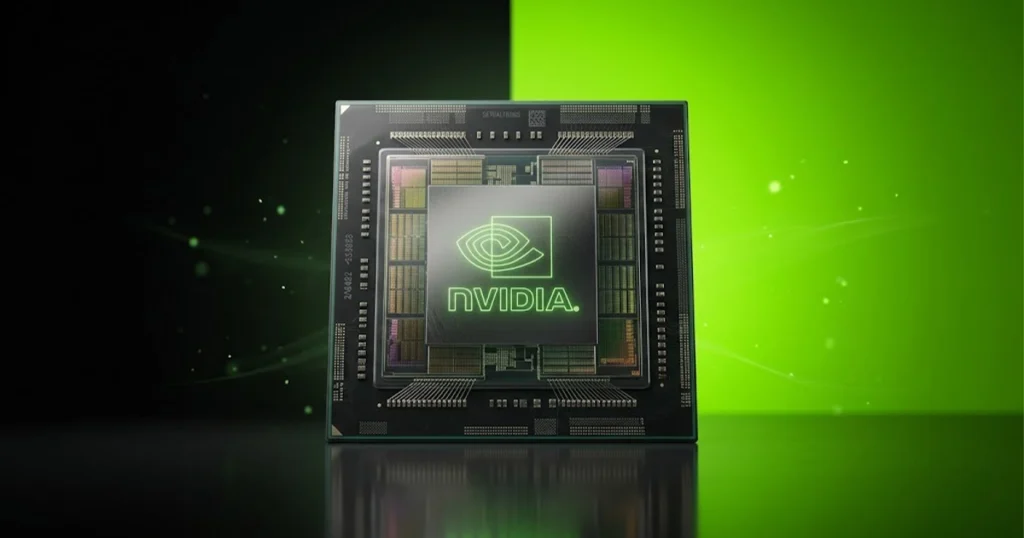
What is the NVIDIA Rubin Platform?
The NVIDIA Rubin Platform is NVIDIA’s next-generation AI infrastructure built for training and running advanced AI models. Instead of focusing on only one GPU, the platform combines several new chips and networking technologies into a unified AI system.
The platform includes:
- NVIDIA Vera CPU
- NVIDIA Rubin GPU
- NVLink 6 Switch
- ConnectX-9 SuperNIC
- BlueField-4 DPU
- Spectrum-6 Ethernet Switch
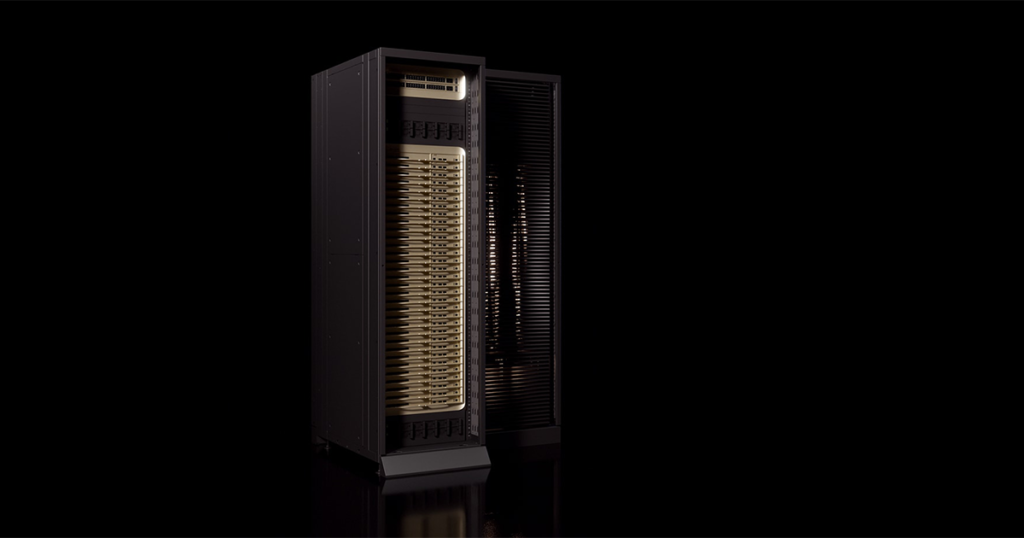
Together, these components are designed to reduce communication delays between processors while increasing computing efficiency across large AI clusters.
Target Users
The Rubin Platform is intended for:
- Cloud service providers
- AI research organizations
- Large enterprises
- AI infrastructure companies
- Developers building foundation models
- High-performance computing environments
It is not designed for consumer PCs or gaming systems.
What’s New in NVIDIA’s New AI Chips?
The Rubin Platform introduces several major improvements officially announced by NVIDIA.
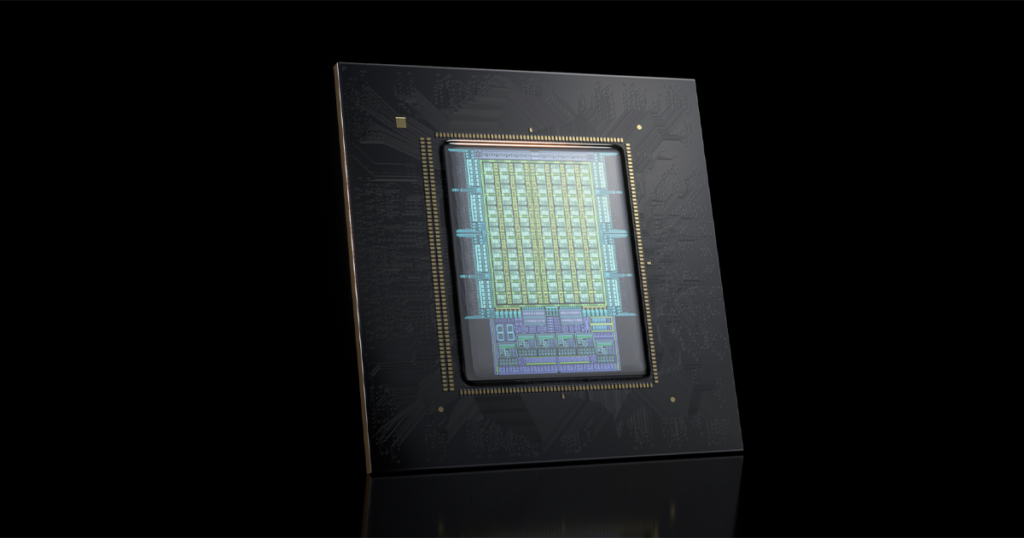
Six-Chip Architecture
Instead of upgrading only the GPU, NVIDIA redesigned the entire AI system. Every major component—from processors to networking—works together using what NVIDIA calls “extreme codesign.”
This approach aims to remove bottlenecks that slow AI workloads.
Better AI Inference Efficiency
According to NVIDIA, Rubin can significantly reduce inference token generation costs compared with the previous Blackwell platform.
The company also states that certain mixture-of-experts (MoE) models require fewer GPUs for training than before.
AI-Native Networking
Rubin introduces new Spectrum-6 Ethernet networking with photonics technology designed for:
- Better power efficiency
- Higher reliability
- Faster communication
- Larger AI clusters
These improvements are aimed at future AI factories containing hundreds of thousands—or eventually millions—of GPUs.
New Storage Architecture
NVIDIA also introduced its Inference Context Memory Storage platform using BlueField-4 processors.
This helps AI models manage large context windows more efficiently during inference.
Key Features
NVIDIA Rubin GPU
The Rubin GPU serves as the main AI accelerator for training and inference workloads.
It is designed for:
- Large language models
- Reasoning models
- Agentic AI
- Multimodal AI
- Long-context inference
NVIDIA Vera CPU
The Vera CPU handles system coordination and data movement across AI clusters.
It works alongside Rubin GPUs to reduce communication delays between processors.
NVLink 6
NVLink 6 provides high-speed communication between GPUs.
This enables faster sharing of AI workloads across large GPU systems.
ConnectX-9 SuperNIC
The SuperNIC improves networking performance inside AI data centers.
It helps reduce latency while increasing data transfer speeds.
BlueField-4 DPU
BlueField-4 manages networking, storage, and security operations without placing additional workload on the CPU.
This allows AI processors to focus on AI computation.
User Interface & Experience
Since Rubin is enterprise AI infrastructure rather than desktop software, there is no traditional graphical user interface for end users.
Developers and administrators manage Rubin-based systems through NVIDIA’s AI software ecosystem, cloud platforms, and supported enterprise management tools. User experience depends on the hardware partner and cloud provider deploying the platform.
Performance
NVIDIA states that Rubin is designed to deliver major efficiency improvements over Blackwell.
Official highlights include:
- Lower inference token cost
- Reduced GPU requirements for selected MoE model training
- Higher networking efficiency
- Improved performance per watt
- Faster AI communication between system components
NVIDIA has not published independent third-party benchmark comparisons for all workloads at the time of writing.
Compatibility
The Rubin Platform supports deployment across enterprise AI infrastructure.
Expected partners include:
- Microsoft Azure
- AWS
- Google Cloud
- Oracle Cloud Infrastructure
- CoreWeave
- Lambda
- Dell
- HPE
- Lenovo
- Cisco
- Supermicro
Availability depends on individual partners and deployment schedules.
AI Features
Rubin is designed specifically for:
- Agentic AI
- AI reasoning
- Large Language Models (LLMs)
- Mixture-of-Experts models
- Multimodal AI
- Long-context inference
- AI factories
The platform is optimized for every stage of AI development, including pre-training, post-training, test-time scaling, and inference.
Security & Privacy
The platform incorporates NVIDIA BlueField-4 DPUs to help improve infrastructure security and workload isolation.
Specific customer security implementations depend on cloud providers and enterprise deployments. NVIDIA has not announced additional consumer-facing privacy features because Rubin targets enterprise AI infrastructure.
Pricing & Plans
NVIDIA has not officially announced retail pricing for the Rubin Platform.
Pricing will vary depending on:
- Cloud providers
- OEM server vendors
- Enterprise configurations
- AI infrastructure deployments
Organizations interested in Rubin systems will need to contact NVIDIA partners for quotations.
Pros
- Complete AI platform rather than only a GPU
- Built specifically for next-generation AI workloads
- Improved networking architecture
- Designed for agentic AI
- Lower inference costs according to NVIDIA
- Broad support from major cloud providers
Cons
- Not intended for consumers
- Official pricing has not been announced
- Requires enterprise-scale infrastructure
- Some availability depends on hardware partners
Comparison
| Feature | Rubin Platform | Blackwell |
|---|---|---|
| Architecture | Six-chip AI platform | Previous generation AI platform |
| AI Focus | Agentic AI, reasoning | Generative AI |
| Networking | Spectrum-6 | Earlier generation |
| CPU | Vera CPU | Grace CPU |
| Target | Future AI factories | Existing AI deployments |
NVIDIA positions Rubin as the successor to Blackwell with greater system-level integration and efficiency.
Best For
The Rubin Platform is best suited for:
- AI cloud providers
- Hyperscale data centers
- AI research labs
- Large enterprises
- Organizations training advanced AI models
Smaller businesses or individual users are unlikely to need this level of AI infrastructure.
System Requirements
NVIDIA has not published traditional minimum or recommended system requirements because Rubin is an enterprise AI platform rather than desktop software.
Hardware requirements vary depending on server manufacturers and deployment partners.
Availability
According to NVIDIA:
- Rubin entered production in 2026.
- Partner availability begins during the second half of 2026.
- Cloud deployments will be offered by major cloud providers and NVIDIA partners.
- Enterprise server vendors are preparing compatible systems.




Add your first comment to this post