
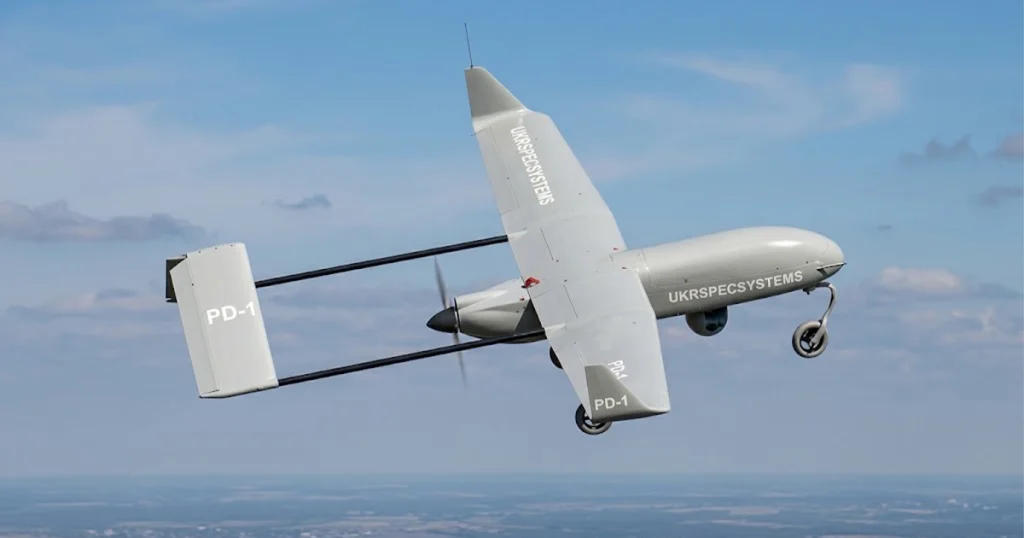
The UK is investing £70 million ($94 million) in a new research programme that could change how wireless connectivity is delivered from the sky. Instead of relying entirely on satellites, researchers are developing high-altitude aircraft that could remain in the stratosphere for long periods and provide communications coverage from above.
The programme, led by the UK’s Advanced Research + Invention Agency (ARIA), supports 18 research and development projects under its Enduring Atmospheric Platforms programme. The goal is to solve one of the biggest problems facing high-altitude aircraft: keeping them powered and operational for long periods.
The concept involves technologies including laser power beaming, radio-frequency (RF) power beaming, advanced energy systems and atmospheric navigation. If successful, these aircraft could provide another option for connecting remote areas, supporting emergency communications and building more resilient communications infrastructure.
What Is the UK Building?
The programme focuses on High-Altitude Pseudo-Satellites (HAPS), which are uncrewed aircraft designed to operate high above the ground, generally in the stratosphere.
Unlike conventional satellites, HAPS aircraft remain within the atmosphere and can potentially be brought back to Earth for maintenance, upgrades or replacement.
Researchers at the University of York, for example, are developing HAPS concepts designed to operate at around 70,000 feet and provide mobile coverage across areas as large as 120 kilometres wide. The aircraft would act somewhat like mobile phone towers in the sky, potentially extending coverage to locations where conventional infrastructure is difficult to deploy.
This puts HAPS between traditional ground networks and satellites. They could potentially provide wide-area coverage while operating much closer to users than orbital spacecraft.
How Could These Aircraft Stay in the Air?
The biggest challenge is not simply building an aircraft that can fly at high altitude. It is keeping the aircraft operating continuously.
Solar-powered HAPS already exist as a research concept, but the UK’s location creates a major problem. During winter, shorter daylight hours and long nights make it difficult for a solar aircraft to generate enough energy to remain airborne continuously.
ARIA’s programme is therefore exploring ways to supply energy to aircraft from the ground.
The agency’s programme target is to demonstrate the continuous delivery of 300 watts to a payload for one week while the aircraft remains in position. A longer-term target is 3 kilowatts for a week.
Several projects are approaching this problem differently.
Lasers Could Send Power to Aircraft
One approach involves laser power beaming.
The basic idea is to transmit energy from a ground-based source toward a receiver installed on the aircraft. The receiver would convert the incoming energy into electricity that could be used to operate the aircraft or recharge its batteries.
UK company Scalable Laser is developing a system that combines high-power laser diodes with photovoltaic receivers as part of the ARIA programme.
The technology could reduce the amount of energy the aircraft needs to carry onboard, potentially allowing HAPS platforms to remain operational for longer periods.
However, laser power transmission has an important limitation: atmospheric conditions. Clouds, fog, rain and other environmental factors can interfere with optical beams, making reliable long-distance transmission difficult.
Microwaves Could Provide Another Power Source
Another project is taking a radio-frequency approach.
Space Solar has received a £1.3 million ARIA contract to develop RF power-beaming technology for high-altitude platforms. Its Project HAWK is investigating the use of a ground transmitter operating at 5.8 GHz and a lightweight receiving antenna, known as a rectenna, integrated into the aircraft.
The concept separates the aircraft from its primary energy source. Instead of carrying all the energy it needs, the aircraft could receive power wirelessly while operating in the stratosphere.
BAE Systems’ Prismatic is also working with ARIA on a power-beaming demonstration involving its PHASA-35 aircraft. The £15.7 million project aims to investigate whether wireless power can help keep the solar-powered aircraft flying throughout the year, including during periods when sunlight is limited.
PHASA-35 has a wingspan of about 35 metres and is designed to operate above 66,000 feet. Its potential applications include communications, Earth observation and surveillance.
Where Does the Internet Connection Come From?
Power is only one part of the experiment.
The aircraft also needs communications equipment capable of connecting people and networks on the ground.
The University of York project is exploring HAPS aircraft carrying radio equipment that could provide mobile wireless coverage over large areas. Researchers say the system could eventually work alongside existing terrestrial networks and, where necessary, low-Earth-orbit satellites.
That means the UK’s drone internet concept is not necessarily designed to completely replace existing networks.
Instead, HAPS could become another layer in the communications infrastructure, filling gaps where fibre, mobile towers or conventional satellite connections are difficult or expensive to use.
UK Drone Internet vs. Starlink
The comparison with Starlink is understandable because both approaches aim to deliver connectivity beyond traditional ground infrastructure. However, they use fundamentally different architectures.
| Feature | Starlink-style satellite network | UK HAPS concept |
|---|---|---|
| Platform | Low-Earth-orbit satellites | High-altitude aircraft |
| Location | Orbiting above Earth | Stratosphere |
| Maintenance | Requires spacecraft operations | Aircraft can potentially return to Earth |
| Power | Mainly onboard solar generation | Solar, batteries and experimental power beaming |
| Coverage | Large satellite network | Regional coverage from aircraft |
| Infrastructure | Satellites, ground stations and user terminals | Aircraft, ground infrastructure and communications systems |
| Development status | Commercially deployed | Research and development |
The key difference is that HAPS aircraft operate much closer to Earth. That could make them easier to upgrade or replace than satellites, although they would also face atmospheric conditions and aviation-related operational challenges.
ARIA itself has described the programme as an opportunity to develop a new infrastructure layer between Earth and space. Its research documents also identify reducing reliance on foreign-owned satellite services as one potential strategic benefit.
Why Is the UK Interested in This Technology?
Connectivity is increasingly being treated as critical infrastructure.
Remote communities can still face limited broadband or mobile coverage, while emergencies can disrupt conventional communications networks. A high-altitude aircraft capable of providing communications coverage could potentially be deployed as an additional layer when ground infrastructure is unavailable or overloaded.
The University of York describes its HAPS research as a potential sovereign communications network, with the aircraft and supporting infrastructure operated under UK control. Researchers say such a system could help maintain communications during national emergencies.
The wider UK government is also placing greater emphasis on sovereign and resilient space capabilities. Its September 2026 Space Strategy identifies satellite communications as one of four priority subsectors and says the UK wants to strengthen its security, sovereignty and resilience in space-related capabilities.
This is particularly relevant as the UK continues to use commercial satellite services. Reuters reported in September 2026 that the UK has spent nearly $40 million on SpaceX’s Starlink and Starshield services, highlighting the country’s current reliance on privately operated U.S.-based satellite infrastructure.
What Are Gravity Waves Doing in the Project?
The programme also includes a more unusual idea involving atmospheric gravity waves.
This is different from wireless power transmission.
Researchers from the University of Bath are working on a project called STRAT-NAV, which aims to investigate whether atmospheric gravity waves can help high-altitude aircraft understand and exploit atmospheric conditions to improve endurance and navigation.
Atmospheric gravity waves are created when air is displaced upward by features such as weather systems or terrain and then moves back under the influence of gravity.
The research could potentially help HAPS aircraft better predict atmospheric movement and use those conditions to remain in position more efficiently.
The Biggest Challenges
The idea of an aircraft acting as a communications tower in the sky sounds straightforward, but several engineering problems remain.
Weather and Atmospheric Conditions
Laser systems can be affected by clouds, fog and other atmospheric conditions. RF systems have their own engineering and efficiency challenges.
A practical network would therefore need extremely reliable power and communications systems.
Energy Efficiency
Wireless power transmission over long distances inevitably introduces losses. The system needs to deliver enough useful energy to the aircraft while remaining efficient enough to make continuous operation economically viable.
Aircraft Endurance
HAPS aircraft must remain in the correct position while dealing with wind, temperature changes and other atmospheric conditions.
ARIA’s programme specifically focuses on sustained operation and cost. Its target includes keeping a platform on station while delivering continuous power to its payload for a full week.
Cost
A technology can work technically and still fail commercially if operating costs are too high.
ARIA’s programme includes an economic target of a gross cost of less than £500 per operating hour as part of its development goals.
Could This Really Become a Starlink Alternative?
It is too early to say.
The UK programme is currently a research and development effort, not a commercial broadband network competing directly with Starlink.
However, the technology could eventually offer a different way to provide connectivity. HAPS platforms could potentially cover remote areas, support emergency communications, provide temporary network coverage and complement terrestrial and satellite networks.
The most interesting part of the programme may therefore not be whether drones completely replace satellites. It is whether the UK can create a practical middle layer between ground-based networks and orbital satellites.
If researchers can solve the power, endurance and cost problems, high-altitude aircraft could become useful communications infrastructure in their own right.
What Happens Next?
ARIA’s Enduring Atmospheric Platforms programme will run for 3.5 years and involves 18 projects working across enabling technologies, system integration and testing, and deployment and communications architecture.
The projects will need to demonstrate that high-altitude platforms can remain operational while delivering useful power to communications payloads.
That means the next major milestone is not the launch of a new UK Starlink service. It is proving that these aircraft can actually stay above the UK for extended periods while receiving or generating enough energy to support useful communications equipment.
If those experiments succeed, the UK could have another option for delivering wireless connectivity from the sky—one based not on thousands of satellites, but on aircraft operating much closer to Earth.
Conclusion
The UK’s £70 million investment is an ambitious experiment in building a new layer of communications infrastructure above the ground but below orbit.
Rather than simply attempting to copy Starlink, the programme is exploring whether high-altitude aircraft, wireless power, advanced communications and atmospheric navigation can work together to provide persistent connectivity.
The technology still has major engineering and commercial challenges to overcome. But if the research succeeds, HAPS could give the UK another tool for connecting remote communities, supporting emergency networks and reducing dependence on conventional satellite infrastructure.





Add your first comment to this post