
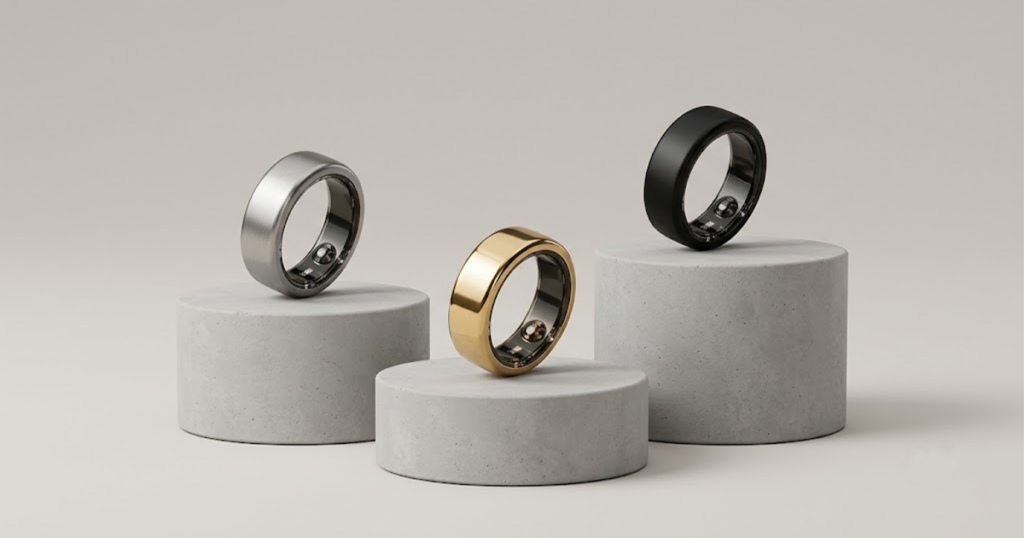
Smart rings have quietly become one of the most interesting categories in wearable tech, and the Oura Ring 4 sits right at the center of that shift. Unlike a smartwatch, it has no screen, no notifications, and no buttons — it simply lives on your finger and works in the background, turning heart rate, temperature, and movement data into daily scores you check in the app. Having gone through detailed hands-on accounts from testers who have worn the ring for weeks or even over a year, alongside comparisons against its closest rivals, here is a full picture of what the Oura Ring 4 actually delivers, how it holds up physically and digitally, and where it wins or loses against the competition.
Design, Build Quality, and Materials
The Oura Ring 4 is built from lightweight titanium with a non-metallic, non-allergenic inner molding, which keeps it comfortable for 24/7 wear and reduces the risk of skin irritation that plagued some earlier ring designs. It’s available in colors like gold, rose gold, brushed silver, stealth, black, and silver, offers 5 to 8 days of battery life, reaches a full charge in about 80 minutes, works with both iOS and Android, and is water resistant to depths of up to 328 feet. Sizing runs from 6 to 13, and Oura sends a complimentary sizing kit with eight 3D-printed ring sizers so you can find the right fit before committing to the real thing — a thoughtful touch, since getting the size wrong on a ring is far more disruptive than with a watch band.
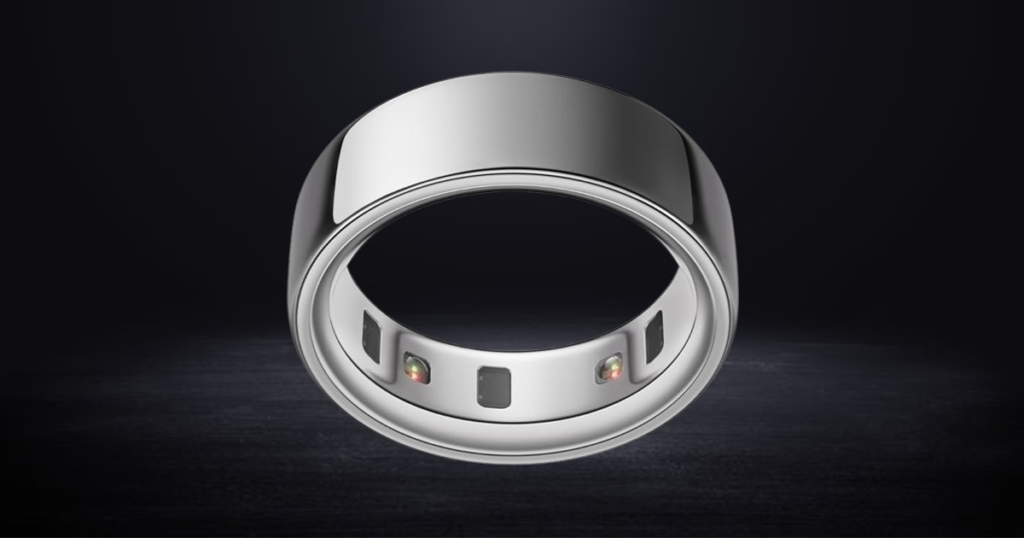
That said, the finish isn’t bulletproof. One long-term reviewer who tested it directly against the Ultrahuman Ring Air and Samsung Galaxy Ring pointed out that smart rings in general are light, fragile pieces of technology that scratch easily, and specifically called out the Oura Gen 4 as scratching more than she’d like, echoed by another comparison noting that the brushed silver finish scratches too easily over time, though darker finishes like silver tend to hide scratches best. On the plus side, in terms of pure ergonomics, the same multi-ring test found the Oura Ring 4 struck the best balance of comfort and secure fit among the four rings tested, thanks to raised sensor bumps on the underside that help keep it correctly positioned. Another Forbes tester echoed this, noting the ring is slightly thicker than most competitors, but that its data tracking keeps expanding into new territory like menstrual and ovulation insights and recent blood panel partnerships.
The Software Experience
This is really where Oura separates itself from the pack. The app organizes everything into three core pillars — Sleep, Readiness, and Activity — and one longtime user described her mornings now revolving around checking her sleep score and readiness score before she even opens Instagram or email, with the app quietly suggesting she take it slower on off days rather than pushing aggressive close-your-rings-style notifications. Sleep tracking in particular uses heart rate, tiny movements picked up by the accelerometer, breathing rate, and temperature changes to calculate total sleep time, including naps, all distilled into a Sleep Score out of 100 (do you want to buy).
Compared to rivals, Oura’s interface is widely seen as the most refined. One reviewer running four rings side by side described Oura as striking the perfect balance between simplicity and depth, and specifically praised the fact that it loads sleep data without needing an internet connection, unlike the Ultrahuman app, which requires an internet connection to load sleep data. Samsung fared worse in the same test — despite Samsung’s wearable expertise, its companion app was described as basic, clunky, and frustrating, with a UI that isn’t user-friendly and data that’s a struggle to interpret.
Accuracy: How Reliable Is the Data?
Sleep accuracy is arguably Oura’s strongest suit. In a test that benchmarked all three major rings against a clinical-grade EEG headband, Oura and Ultrahuman delivered the best performance, closely matching EEG data with only minor inaccuracies in sleep cycle detection, while Samsung’s results were erratic — it even penalized the tester’s Sleep Score into the 70s–80s for a 9-hour night that Oura and Ultrahuman both scored in the 90s. A separate four-way comparison against an Apple Watch found the Oura Ring 4 delivered the best overall accuracy, especially for sleep, with deep and REM stages landing closest to the Apple Watch’s benchmark, while the Galaxy Ring missed a 30-minute wake-up entirely.
Where Oura is less convincing is workout tracking. A Forbes tester who wore a Polar chest strap during gym sessions found the ring was slow to pick up her heart rate once a workout actually started, though it was fairly accurate at capturing her overall heart rate range and specific peaks afterward. Another long-term wearer put it bluntly: she now takes the ring off during strength training to avoid scratches and relies on her Apple Watch for real-time workout data instead, noting her Apple Watch workouts sync seamlessly into the Oura app, and while step counts aren’t always identical between the two devices, they’re close enough not to worry about.
Pros & Cons
Pros
- Best-in-class sleep and recovery tracking, closely matching clinical-grade EEG benchmarks
- Comfortable, secure fit thanks to titanium build and raised sensor bumps that keep it aligned
- Polished, calm app experience that loads sleep data without needing an internet connection
- Long battery life (5–8 days) with a fast 80-minute full charge
- Expanding health features, including menstrual/ovulation tracking and blood panel partnerships
- Free sizing kit makes it easy to get the right fit before committing
Cons
- Full feature set requires a paid membership ($5.99/month or $69.99/year)
- Slow to register heart rate once a workout actually starts, and not built for real-time training metrics
- Brushed silver and lighter finishes scratch more easily than darker options
- Slightly thicker than most rival smart rings
- No GPS or on-ring screen, so it can’t replace a smartwatch for active workout tracking
Rating
| Category | Score |
|---|---|
| Design & Build Quality | 8.5/10 |
| Comfort | 9/10 |
| App & Software | 9.5/10 |
| Sleep & Recovery Accuracy | 9.5/10 |
| Workout/Activity Accuracy | 6.5/10 |
| Battery Life | 8/10 |
| Value (with subscription) | 7/10 |
| Overall | 8.3/10 |
How It Stacks Up Against the Competition
Vs. Ultrahuman Ring Air — Ultrahuman uses fighter jet-grade titanium reinforced with a tungsten carbide carbon coating and medical-grade hypoallergenic epoxy resin on the inner side, weighs just 2.4 grams, and is offered in sizes 5 through 14. Its standout software feature is PowerPlugs, a plug-in system inside the app that lets users track extra metrics like circadian rhythm and vitamin D exposure for free, with a few premium plugs like Afib detection requiring a small subscription. It’s a strong alternative for people who want deeper metabolic insights without Oura’s subscription wall, though one reviewer found its dashboard more overwhelming with more going on, even if it does surface more actionable data than Oura, like total sleep cycles and sleep debt.
Vs. Samsung Galaxy Ring — Built from Titanium Grade 5 with an epoxy underside, weighing 2.3–3 grams depending on size, and available from sizes 5 through 15, the Galaxy Ring’s biggest edge is its seamless tie-in with Samsung Health and Galaxy Watches, plus the fact that battery life extends up to 30% when worn alongside a Galaxy Watch, since the watch can offload some of the data capture. Its biggest drawback is platform lock-in — it’s Android only, with no iPhone support — and multiple testers flagged inconsistent tracking as a real weakness.
Vs. RingConn Gen 2 — This is the value pick of the group. It came out ahead in one comprehensive four-ring test as offering the best battery life paired with a portable charging case, no subscription fees, and step counts that landed closest to the Apple Watch of any ring tested. If you want most of what a smart ring offers without an ongoing bill, it’s the one to shortlist.
The Subscription Question
This is the recurring sticking point in nearly every review. Oura’s hardware works without a membership, but the readiness, sleep, and long-term insights that make the ring genuinely worth buying sit behind an Oura Membership priced at $5.99 a month or $69.99 a year, while RingConn, the Galaxy Ring, and the Ultrahuman Ring Air all ship with full features unlocked and no mandatory monthly fee. One Forbes reviewer summed up the tension well, admitting she pays it because it does feel valuable, but confessed that subscription fatigue has fully set in, and if the annual fee were any higher than $70 she likely wouldn’t renew.
My Take
Weighing all of this together, the Oura Ring 4 earns its reputation as the most polished and trustworthy option in the smart ring category, particularly for sleep and recovery tracking — its accuracy against clinical-grade benchmarks and its calm, non-naggy approach to daily coaching are genuinely hard to beat. But it isn’t the objectively “best” ring for everyone. If you’re on a budget or allergic to subscriptions, RingConn Gen 2 gives you most of the meaningful data without the recurring cost. If you’re deep in the Samsung ecosystem, the Galaxy Ring’s integration with Galaxy Watch and Samsung Health may matter more to you than raw accuracy. And if you want a more experimental, metabolism-focused take on health data, Ultrahuman is worth a look. Oura’s real advantage isn’t any single sensor or spec — it’s the years of refinement behind its app, which turns raw biometric noise into something people actually act on every morning. That’s a hard thing to copy, subscription fee or not.
Quick Verdict
Best for: People who prioritize sleep quality, recovery tracking, and a distraction-free wellness companion, and who don’t mind paying an annual membership for the full experience.
Not ideal for: Serious lifters or runners who want real-time workout metrics and GPS — a smartwatch will serve that need better — or anyone unwilling to pay a recurring fee for full functionality.



Add your first comment to this post