
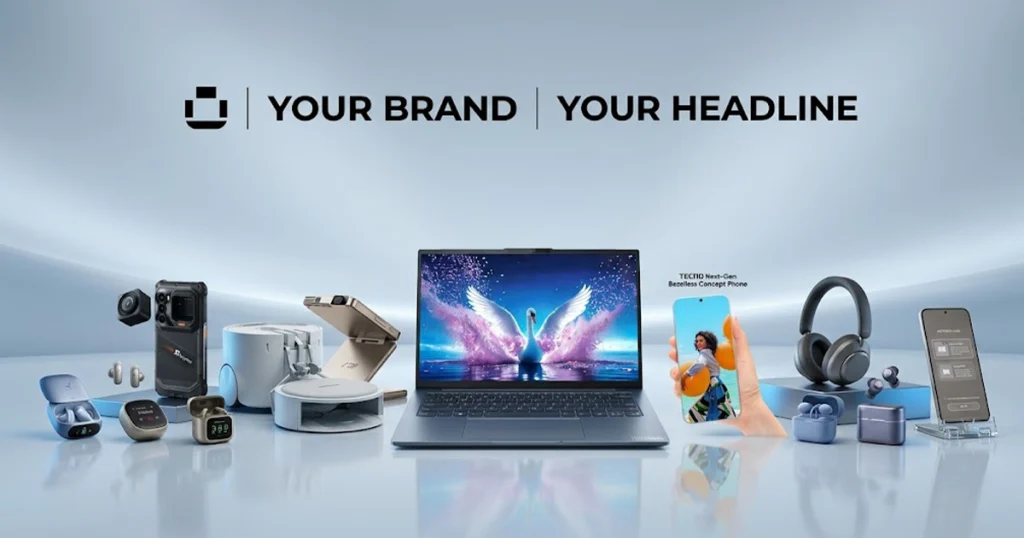
 IFA 2026 has officially wrapped up in Berlin, bringing together thousands of exhibitors and visitors for one of Europe’s biggest consumer technology events. The five-day show, held from September 4 to September 8, put some of the industry’s newest ideas in front of consumers, journalists and technology professionals.
This year’s event was particularly focused on artificial intelligence, robotics, smart-home technology, innovative displays and connected devices. Rather than relying on one major product category, IFA 2026 demonstrated how technology companies are increasingly combining AI with everyday hardware.
From bezel-less smartphones and expandable laptops to intelligent robots, new projectors and connected-home systems, the event offered an extensive look at where consumer technology could be heading next.
Key Takeaways
- IFA 2026 brought together more than 2,000 exhibitors and a huge international audience.
- AI was one of the dominant themes across smartphones, smart homes, audio and robotics.
- Robotics is moving beyond demonstrations toward more practical household applications.
- Manufacturers are experimenting with expandable, bezel-less and paper-like displays.
- Connected ecosystems are becoming increasingly important to major technology companies.
- New gadgets are increasingly designed around portability, automation and personalization.
- Xiaomi, Lenovo, Tecno, Anker, iRobot and other companies showcased notable innovations.
What Is IFA 2026?
IFA Berlin is one of the world’s major consumer technology and home appliance exhibitions. The annual event gives manufacturers an opportunity to showcase new products, concepts and technologies before they reach wider markets.
The 2026 edition ran in Berlin from September 4 through September 8 and featured a broad range of consumer electronics, smart-home products, computing devices, appliances, robotics and emerging technologies. The official IFA program placed significant emphasis on AI, robotics, connected living and smart-home innovation.
The importance of IFA 2026 therefore goes beyond individual product launches. Trade shows such as IFA can reveal broader industry trends by showing what multiple manufacturers are working on at the same time.
This year, three themes stood out particularly clearly: AI becoming more deeply integrated into consumer products, robotics becoming more practical, and devices becoming increasingly connected.
The Biggest IFA 2026 Gadgets and Technologies
1. Tecno’s Bezel-Less Smartphone Pushes Display Design Further
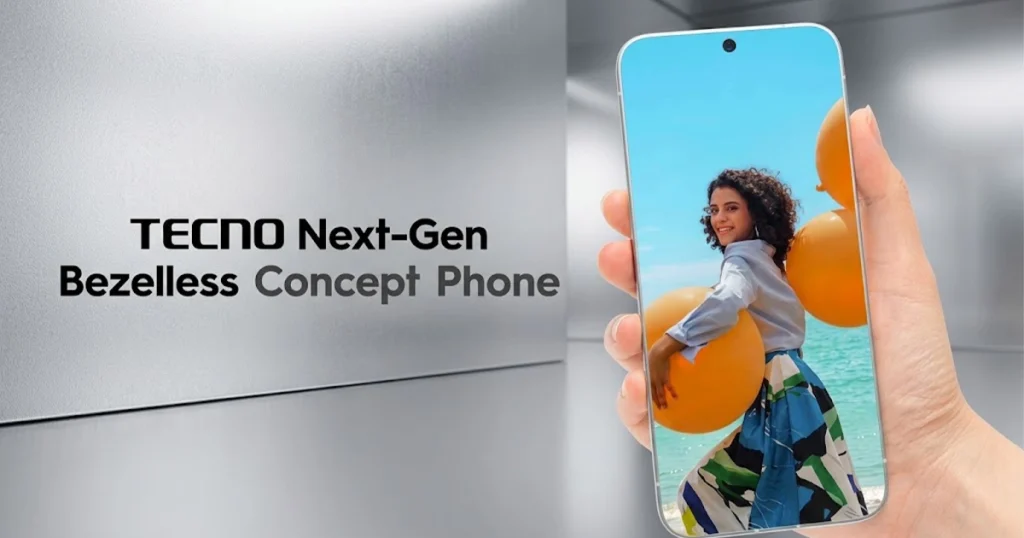
One of the most visually striking smartphone concepts at IFA 2026 came from Tecno.
The company’s bezel-less concept phone uses an edge-wrapped 6.78-inch display designed to minimize the traditional borders surrounding a smartphone screen. The result is a device that puts much more visual emphasis on the display itself.
While experimental smartphone designs are not necessarily an indication of what every future phone will look like, Tecno’s concept demonstrates how manufacturers are still searching for ways to make familiar smartphone designs feel new.
The smartphone market has matured considerably. Bigger screens, faster processors and increasingly capable cameras are now common across premium devices. As a result, companies are looking toward physical design and display technology for the next major differentiators.
Why it matters: The concept shows that display engineering remains an important area of smartphone innovation, even as manufacturers increasingly focus on AI and computational photography.
2. Lenovo ThinkBook Project Swan Expands the Laptop Screen
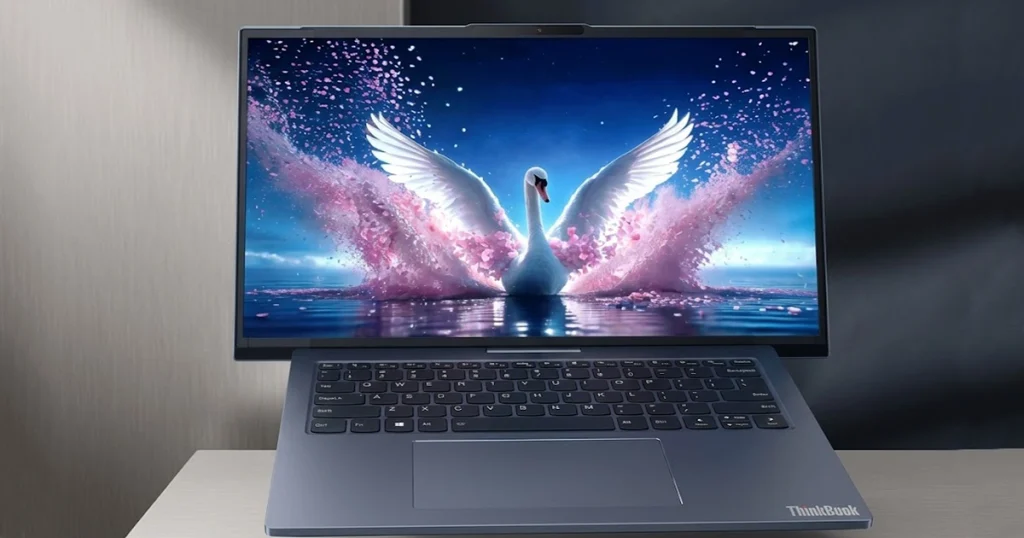
Lenovo brought one of the more interesting laptop concepts to IFA 2026 with its ThinkBook Project Swan.
The concept uses a rollable display that can expand a conventional 14-inch laptop into a much larger 17-inch screen. Instead of carrying a physically larger laptop all the time, users could potentially expand the display when additional workspace is required.
This idea is particularly interesting for professionals who regularly work with multiple windows, large documents, creative applications or other content that benefits from additional screen space.
Lenovo also showed Project AeroBlade, another experimental laptop concept that uses solid-state AirJet cooling technology instead of conventional cooling fans. The approach is intended to help manufacturers create thinner and quieter laptops.
Why it matters: Both concepts demonstrate that future laptops could become more flexible without simply becoming larger and heavier.
3. iRobot Roomba Duo Takes a Two-Robot Approach
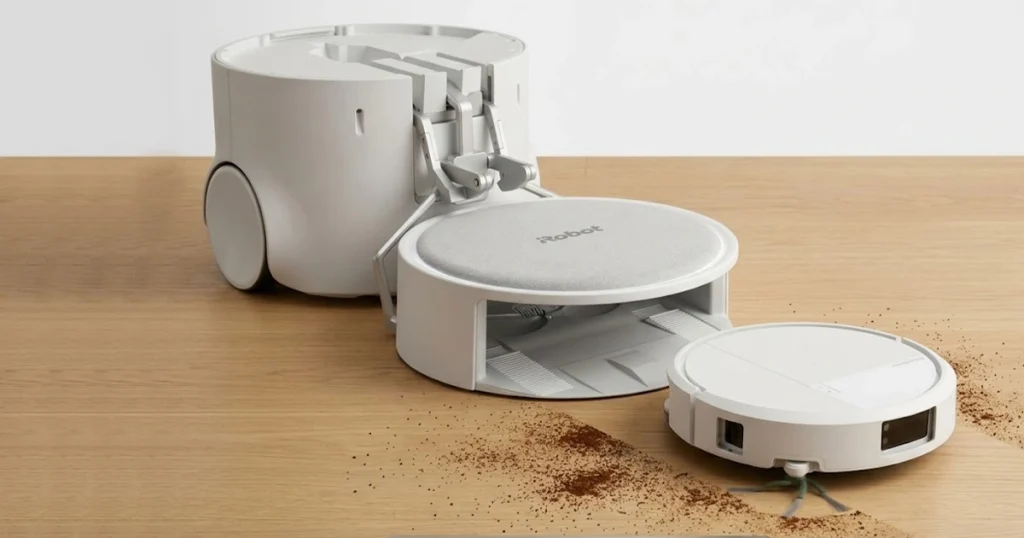
Robot vacuums have become common household devices, but iRobot used IFA 2026 to explore a different approach with the Roomba Duo.
The system combines a primary cleaning robot with a smaller deployable unit designed to reach tighter spaces. Instead of asking one robot to handle every part of a home, the concept divides cleaning responsibilities between different machines.
That could represent an interesting direction for domestic robotics.
As robotic cleaners become more capable, the challenge is increasingly about handling the areas that traditional robot vacuums struggle to reach. Smaller robotic components could eventually provide a solution for corners, narrow spaces and other difficult areas.
Why it matters: The Roomba Duo shows how household robotics could evolve from single-purpose machines into coordinated systems.
4. RugOne Xsnap 7 Pro Combines a Smartphone With an Action Camera
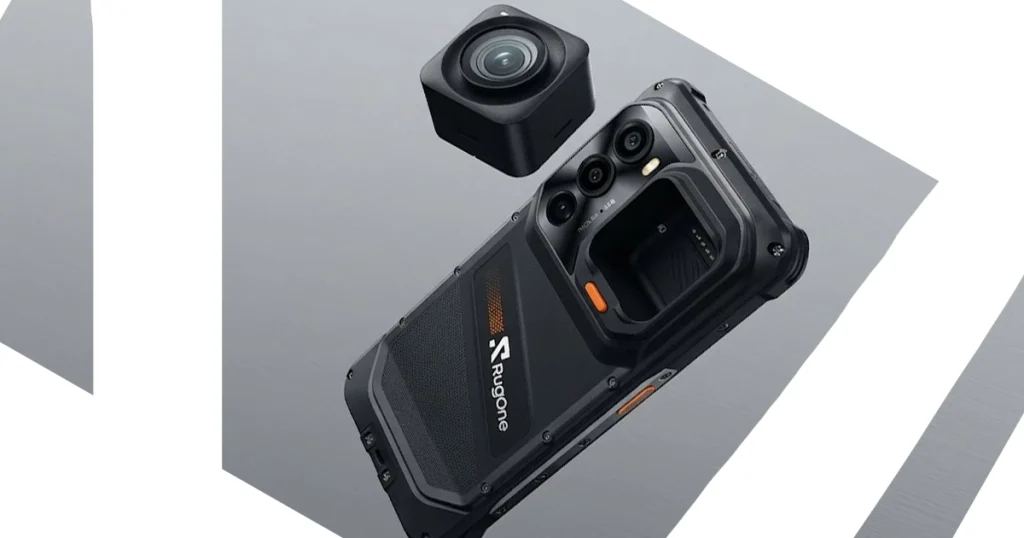
Another unusual product showcased at IFA was RugOne’s Xsnap 7 Pro.
The rugged smartphone features a detachable action camera capable of recording 2.7K video. Instead of requiring consumers to carry a separate smartphone and action camera, the concept attempts to combine both functions in one device.
Modular products like this remain relatively uncommon in mainstream consumer electronics, but they can be particularly interesting for people who spend time outdoors or want additional camera flexibility.
Why it matters: The Xsnap 7 Pro illustrates how manufacturers are experimenting with modular hardware to add specialized capabilities to everyday devices.
5. Aurzen Zip Pro Makes Portable Projection More Interesting
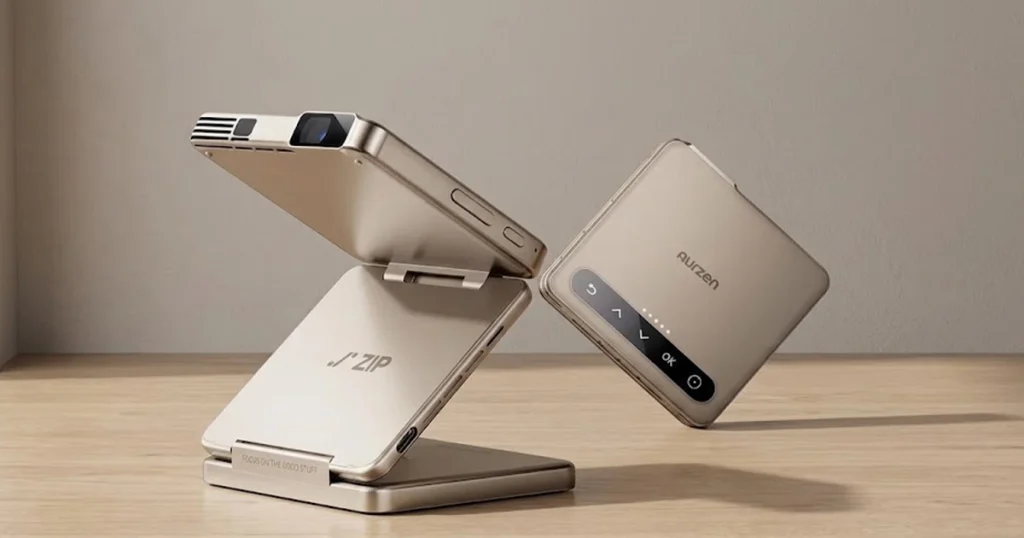
Portable projectors continue to evolve, and Aurzen used IFA 2026 to showcase an upgraded Zip Pro.
The tri-fold projector is designed around portability, allowing the device to fold into a more compact form when it is not being used. The updated model also brings improvements in brightness and resolution.
Portable projectors have traditionally involved a compromise between size and performance. Larger projectors can deliver stronger images, while compact models are easier to transport.
Foldable designs attempt to reduce that compromise.
Why it matters: Products such as the Zip Pro show how manufacturers are trying to make large-screen entertainment easier to take from one location to another.
6. TCL Nxtpaper P80 Ultra Explores a Paper-Like OLED Display
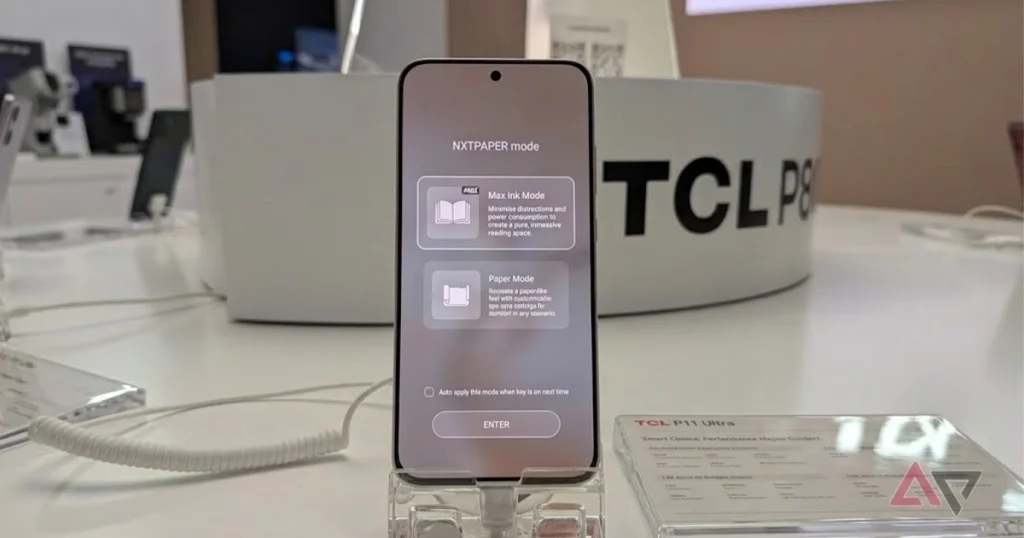
TCL also used IFA 2026 to showcase the Nxtpaper P80 Ultra.
The tablet features a paper-like OLED display designed to provide a different visual experience from conventional glossy screens.
The development reflects a broader interest in display comfort. Consumers increasingly spend hours reading, watching videos, studying and working on screens, creating demand for technologies that can offer different viewing characteristics.
Why it matters: Display innovation is no longer only about resolution and refresh rates. Surface treatment and viewing experience are becoming important parts of the competition.
7. Anker Expands Its AI-Powered Audio and Smart-Home Ecosystem
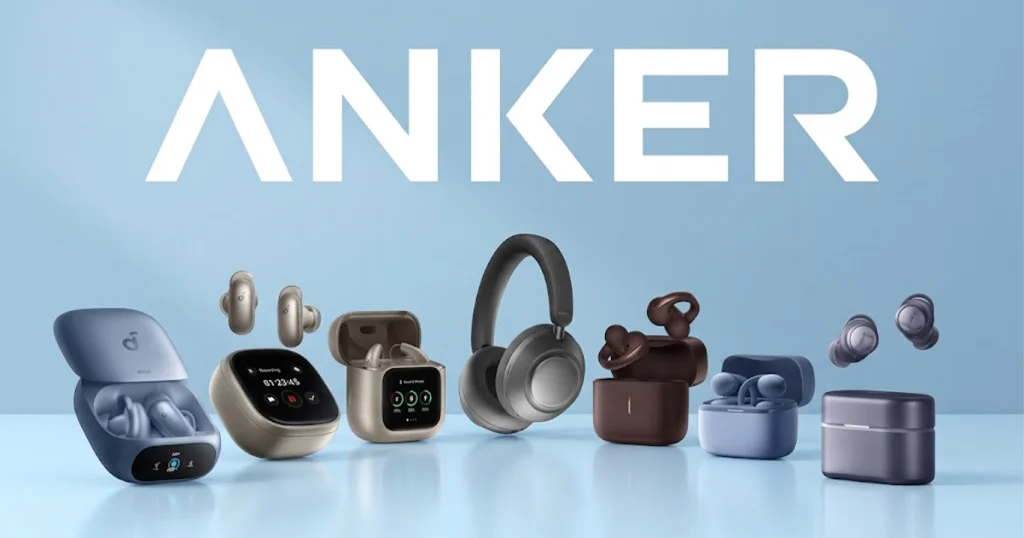
Anker had a significant presence at IFA 2026, with new products covering audio, home security, robotics and energy management.
The company’s Soundcore lineup included products such as the Space 2 Pro, AeroClip 2, AeroClip 2 Pro and Liberty Buds 2. Anker also highlighted its AI-focused audio processing technology for improving voice isolation and call quality.
Beyond headphones and earbuds, Anker presented its growing smart-home ecosystem. Its MindBase hub is designed to connect home devices and process information locally, while the company also showcased new security cameras and robotic home products.
This demonstrates a broader industry movement: companies that once focused on individual gadgets are increasingly trying to build complete technology ecosystems.
Why it matters: The competition is increasingly shifting from individual products to platforms that connect multiple devices.
AI Was One of the Biggest Themes at IFA 2026
AI was arguably the most important technology trend running through IFA 2026.
However, the interesting part wasn’t simply the number of products carrying an “AI” label. Instead, AI is increasingly being used as an underlying technology across different categories.
Smart-home systems can use AI to automate routines. Headphones can use advanced processing to improve calls. Robots can use AI to understand environments and tasks. Smartphones can use on-device intelligence to improve photography and other functions.
IFA’s official programming highlighted AI-powered robots, smart living and connected technologies as major areas of innovation.
This suggests that AI is gradually becoming less visible as a standalone feature and more important as a background layer powering everyday devices.
Robotics Is Moving Closer to Everyday Life
Robotics was another major theme throughout the show.
IFA’s 2026 program placed a strong emphasis on humanoid robots and AI-powered machines designed for interaction, entertainment, assistance and other applications.
Household robots were particularly interesting because they demonstrate a more practical side of robotics.
Robot vacuums, lawnmowers and other automated machines already perform specific tasks. The next stage could involve systems capable of understanding more complicated environments and handling multiple tasks.
That doesn’t mean humanoid robots are suddenly ready to replace humans in every household. Instead, the developments at IFA suggest that manufacturers are increasingly working toward practical, specialized robotic assistance.
Smart Homes Are Becoming More Intelligent
The smart-home category also received significant attention at IFA 2026.
Instead of treating smart appliances as isolated products, manufacturers are increasingly connecting them through centralized ecosystems.
A modern smart home can potentially include:
- Smart appliances
- Security cameras
- Robot vacuums
- Robot lawnmowers
- Smart lighting
- Energy-management systems
- Voice assistants
- Connected entertainment devices
Anker’s MindBase is one example of this direction, with the company positioning it as a central hub for connected home devices and local processing.
The bigger trend is clear: the smart home is moving from simple remote control toward automation and coordination.
Xiaomi Brings Its AI Ecosystem to IFA 2026
Xiaomi made its IFA debut in 2026 with a large exhibition focused on its Human × Car × Home ecosystem.
The company used the event to demonstrate how smartphones, vehicles and smart-home products can work together through its broader technology platform. Xiaomi had previously said its IFA appearance would focus on how AI could move beyond the screen and into real-life experiences.
The approach represents a significant change in the way technology companies compete.
Instead of selling only smartphones, manufacturers increasingly want to build ecosystems that keep users connected across different parts of their lives.
At IFA, Xiaomi’s presence demonstrated how smartphones, smart-home devices and electric vehicles are increasingly being treated as parts of one connected technology environment.
What IFA 2026 Tells Us About the Future of Tech
The most important takeaway from IFA 2026 isn’t one particular gadget.
It’s the direction of the entire consumer technology industry.
AI Is Becoming Invisible
AI is gradually moving away from being something users consciously interact with and toward becoming a technology that operates in the background.
A smart appliance doesn’t necessarily need to advertise that it uses AI. What matters is whether it can understand context and perform useful tasks automatically.
Robots Are Becoming More Practical
Robotics is moving beyond futuristic demonstrations.
From robot vacuums and lawnmowers to humanoid concepts and other autonomous machines, companies are increasingly focusing on real-world applications.
Devices Are Becoming Ecosystems
The smartphone is no longer necessarily the center of a user’s technology experience.
Cars, computers, appliances, wearables, cameras and home devices are increasingly connected.
Hardware Design Is Becoming More Experimental
IFA also showed that traditional hardware designs aren’t disappearing.
Instead, manufacturers are experimenting with them.
We saw:
- Rollable laptop displays
- Near-bezel-less smartphones
- Foldable projectors
- Modular cameras
- Paper-like OLED displays
- Ultra-thin computing devices
These concepts show that hardware innovation remains alive even as software and AI receive much of the industry’s attention.
The Most Interesting IFA 2026 Trends at a Glance
| Technology trend | What IFA 2026 showed |
|---|---|
| AI | AI is spreading across everyday consumer products |
| Robotics | Robots are moving toward practical household applications |
| Smart home | Devices are increasingly connected into broader ecosystems |
| Displays | Manufacturers are experimenting with rollable, bezel-less and paper-like screens |
| Audio | AI-assisted processing is improving communication and listening |
| Computing | Laptop designs are becoming thinner and more flexible |
| Ecosystems | Companies are connecting phones, homes and vehicles |
| Portability | More products are designed to deliver larger capabilities in smaller forms |
Which IFA 2026 Technologies Matter Most?
There wasn’t a single winner at the show. Different products demonstrated different directions for the industry.
Most interesting smartphone design
Tecno’s bezel-less concept stands out because it demonstrates how manufacturers are still trying to reinvent the traditional smartphone display.
Most interesting laptop concept
Lenovo Project Swan offers one of the clearest examples of how a laptop could provide a much larger screen without permanently increasing its footprint.
Most practical robotics direction
Household robots may ultimately have the greatest everyday impact because they already address recognizable problems such as cleaning and maintenance.
Most futuristic technology
Humanoid robotics and physical AI remain among the most ambitious developments shown at the event.
Most interesting ecosystem strategy
Xiaomi’s Human × Car × Home approach demonstrates how manufacturers are attempting to connect multiple categories through AI and software.
Most interesting smart-home development
Anker’s expanding ecosystem, including its MindBase hub and connected security products, demonstrates how companies are attempting to bring more intelligence and coordination into the home.
Final Verdict: IFA 2026 Shows Where Consumer Technology Is Heading
IFA 2026 was not defined by a single revolutionary gadget. Instead, the event offered a broad picture of how consumer technology is changing.
AI is becoming more deeply integrated into everyday hardware. Robotics is moving toward practical applications. Smart-home products are becoming more interconnected. Meanwhile, manufacturers are continuing to experiment with new display formats, modular designs and more portable hardware.
That combination makes IFA 2026 particularly interesting.
The technology industry is no longer simply trying to make individual devices faster or more powerful. It is increasingly trying to make those devices work together, understand users and automate everyday tasks.
For consumers, the biggest question is therefore not simply which gadget has the most impressive specifications.
The more important question is which of these technologies will actually make everyday life easier.
And based on what was showcased in Berlin, the next generation of consumer technology is likely to be defined by AI, automation, robotics and connected ecosystems.


Add your first comment to this post